What This Page Covers
What is PMDD, why is it more common in ADHD women, and what actually helps?
ADHD and PMDD
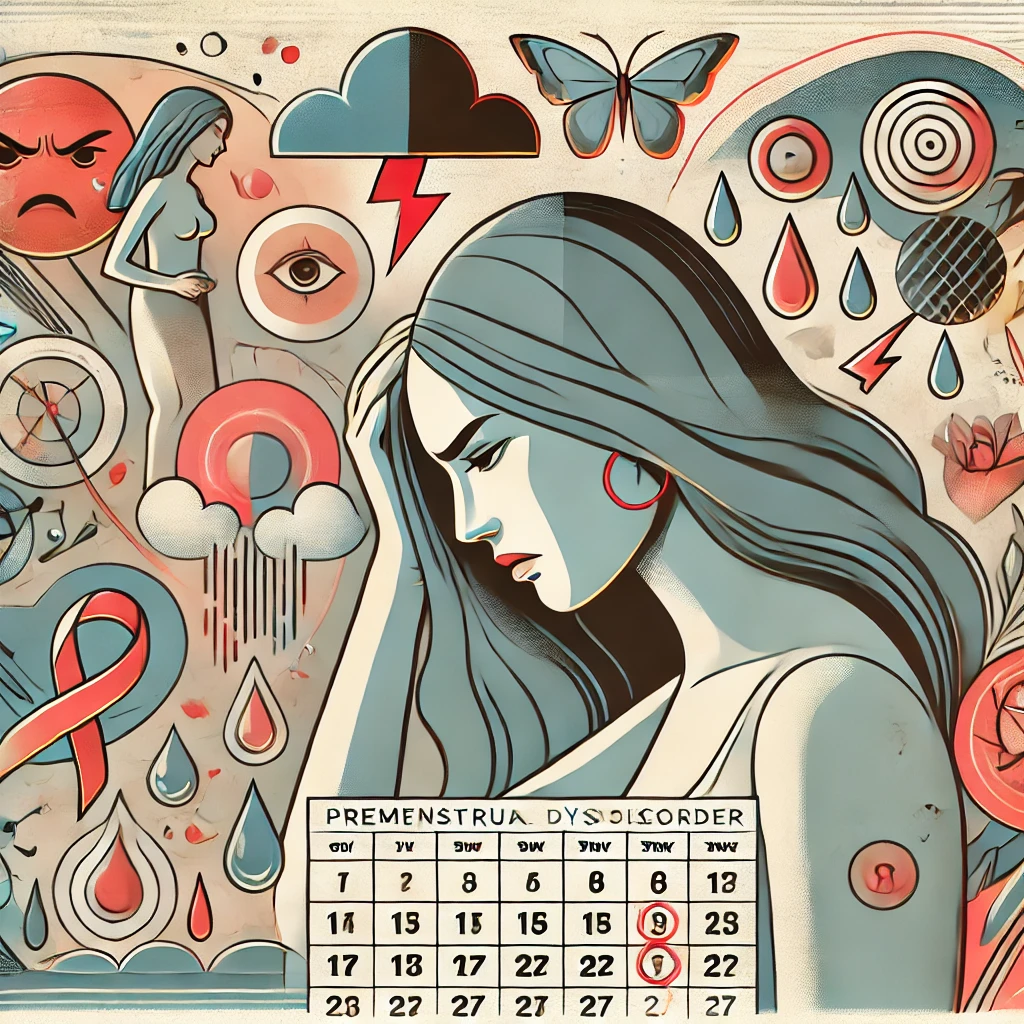
Some ADHD women experience a level of premenstrual symptom worsening that goes far beyond typical PMS.
PMDD (Premenstrual Dysphoric Disorder) is a hormone-related mood disorder marked by severe emotional and cognitive symptoms that appear predictably in the luteal phase and resolve shortly after menstruation begins.
For ADHD women, PMDD often looks like a sudden loss of emotional regulation, cognitive capacity, and coping ability for part of every month.
What PMDD Feels Like in ADHD Women
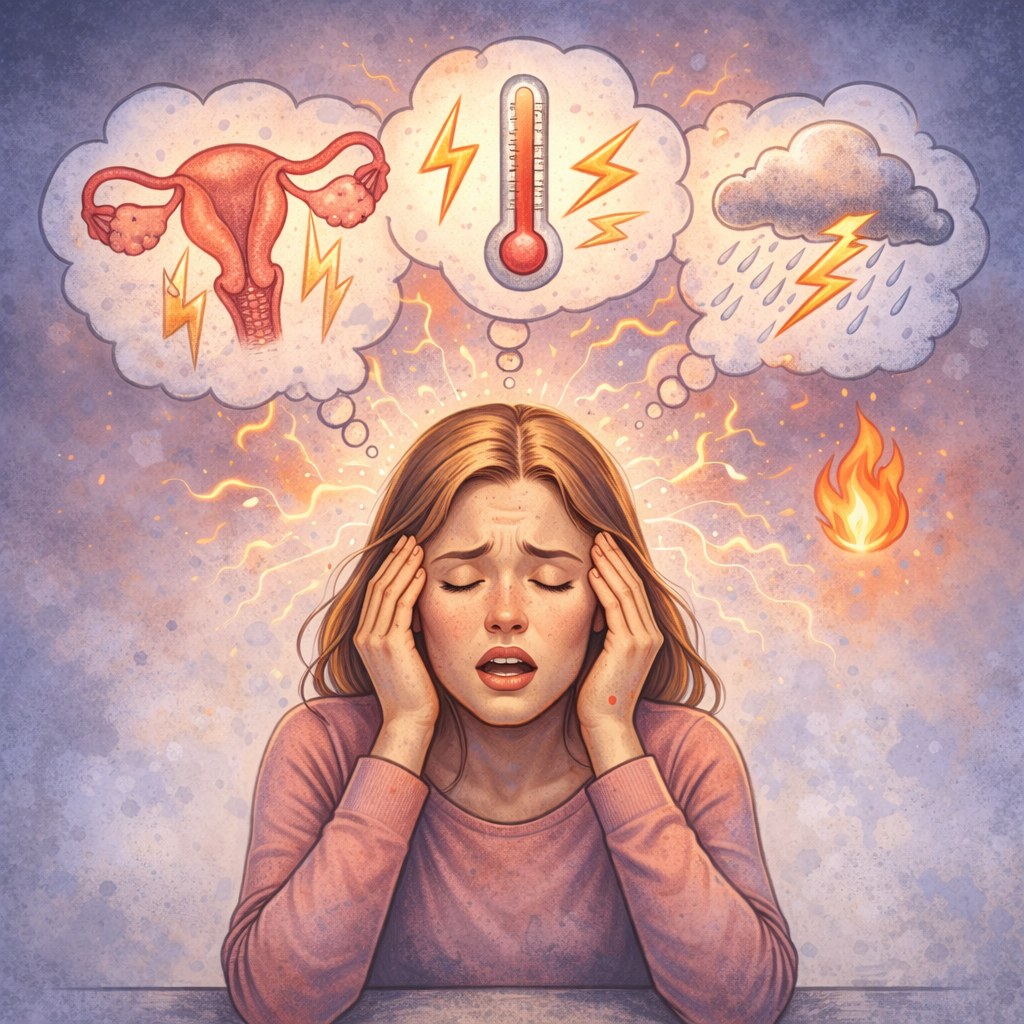
During the luteal phase, some women experience:
🔵 Intense irritability or rage
🔵 Sudden depression or hopelessness
🔵 Heightened rejection sensitivity
🔵 Severe anxiety or panic
🔵 Cognitive shutdown or overwhelm
🔵 Suicidal thoughts that resolve once menstruation begins
These symptoms are cyclical, not constant.
If it feels like your personality changes for one to two weeks each month and then resets, PMDD should be considered.
PMDD vs PMS
PMS may be uncomfortable but usually allows daily functioning.
PMDD:
🔵 Significantly disrupts work, relationships, or safety
🔵 Involves marked mood symptoms, not just physical discomfort
🔵 Follows a predictable hormonal pattern
🔵 Improves rapidly after menstruation starts
PMDD is not a coping failure.
It is a neurobiological response to hormone change.
Why PMDD Is Often Missed in ADHD Women
PMDD is frequently overlooked in ADHD women because:
🔵 ADHD already includes emotional reactivity
🔵 Time blindness makes cyclical patterns harder to notice
🔵 Alexithymia and interoceptive differences reduce symptom tracking
🔵 Clinicians may mislabel symptoms as anxiety, depression, or personality traits
As a result, many women are treated for the wrong condition for years.
Why ADHD Increases PMDD Risk
Research shows higher rates of hormone-related mood disorders in women with ADHD.
Contributing factors include:
🔵 Greater sensitivity to estrogen and progesterone shifts
🔵Low dopamine during low-estrogen phases
🔵 Baseline emotional regulation load from ADHD
🔵 Increased stress reactivity
PMDD in ADHD women is best understood as a stacked vulnerability, not a separate diagnosis.
How PMDD Is Diagnosed
PMDD diagnosis requires:
🔵 Daily symptom tracking across at least two cycles
🔵 Clear luteal-phase onset
🔵 Symptom relief shortly after menstruation begins
You might try using the Daily Record of Severity of Problems (DRSP) but some women report it can feel burdensome.
Tracking does not need to be perfect to be informative.
Treatment Approaches That Help ADHD and PMDD
There is no single solution. Treatment is often layered.
Medication Strategies
Depending on the individual, clinicians may consider:
🔵 Continuous or luteal-phase SSRIs
🔵 Cycle-based medication adjustments
🔵 ADHD medication timing or dose review
All medication decisions should be individualized and monitored.
Hormonal Approaches
Some women benefit from:
🔵 Hormonal contraception that stabilizes fluctuations
🔵 Continuous dosing approaches
Hormonal treatments affect ADHD women differently and require careful evaluation.
Non-Pharmacological Supports
These do not replace treatment, but they reduce load:
🔵 Reducing cognitive demands during the luteal phase
🔵 Externalizing reminders and decisions
🔵 Temporarily lowering social and emotional expectations
🔵 Prioritizing sleep and stress reduction
Accommodation matters.
Safety Note
YOu deserve immediate support if you experience suicidal thoughts, or self-harm urges, during the luteal phase, this is medically urgent and deserves immediate support.
PMDD-related suicidality is real and treatable.
A Neurodivergent-Affirming Reframe
Pmdd is a predictable interaction between hormones and a sensitive nervous system.
Understanding this allows for targeted care instead of self-blame.
Related Resources
🔵 ADHD and Your Period
🔵 ADHD Women in Perimenopause
🔵 ADHD and Hormones
More Resources
Female-specific pharmacotherapy in ADHD: premenstrual adjustment of psychostimulant dosage.
Prevalence of hormone-related mood disorder symptoms in women with ADHD
duke study on adhd and hormones
The International Association for Premenstrual Disorders has more information about diagnosis and support, and I recommend it.
References
De Jong, M., Wynchank, D. S. M. R., van Andel, E., Beekman, A. T. F., & Kooij, J. J. S. (2023). Female-specific pharmacotherapy in ADHD: premenstrual adjustment of psychostimulant dosage. Frontiers in Psychiatry, 14, 1306194. https://doi.org/10.3389/fpsyt.2023.1306194
Dorani, F., Bijlenga, D., Beekman, A.T.F., Van Someren, E.J.W. and Kooij, J.J.S., 2021. Prevalence of hormone-related mood disorder symptoms in women with ADHD. Journal of Psychiatric Research, 133(3), pp.10-15. doi:10.1016/j.jpsychires.2020.12.005.
Petrillo F. L.Psychiatric Disorders in Women: Diagnostic and Treatment Considerations Across the Female Lifespan (February 2020) PMDD https://mghcme.org/
