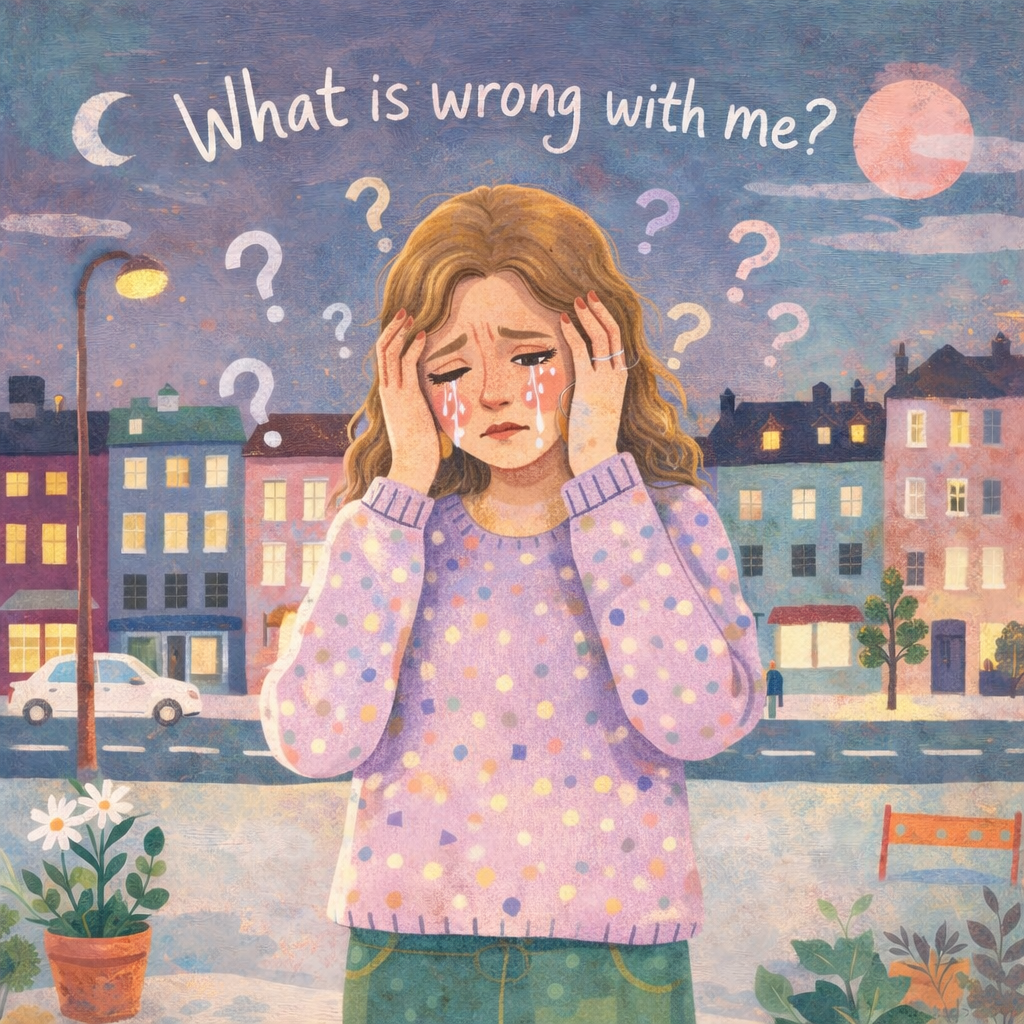
Rumination in ADHD Women
Rumination in ADHD women usually shows up after something has already happened.
The conversation is over.
The decision is made.
The moment has passed.
But the mind keeps returning to it.
This is not the same as worry.
It is not anticipation.
It is not “what if.”
Rumination is post-event mental replay — revisiting, reanalyzing, and judging past moments long after they are done.
This page explains:
-
what rumination is
-
why it is common in ADHD women
-
how it differs from worry and panic
-
what actually helps interrupt the loop
What Rumination Is
Rumination is a pattern of repetitive, self-focused thinking centered on past events, perceived mistakes, or unanswered questions.
It often involves:
-
replaying conversations
-
analyzing tone, wording, or reactions
-
revisiting decisions
-
mentally reliving uncomfortable moments
-
asking questions like “Why did I say that?” or “What does that mean about me?”
Rumination does not move toward resolution.
It circles.
Rumination Is Not the Same as Worry or Panic
These experiences can overlap, but they are different patterns.
Rumination
-
past-oriented
-
focused on evaluation and meaning
-
often tied to shame, regret, or self-criticism
-
quiet, persistent, and mentally draining
Worry
-
future-oriented
-
focused on anticipation and prevention
-
driven by uncertainty and vigilance
See ADHD and Worry in Women.
Panic
-
present-moment and body-based
-
sudden and intense
-
characterized by fear of losing control
See ADHD and Panic Attacks.
If your anxiety is about what might happen, that is worry.
If your anxiety is about what already happened, that is rumination.
Why Rumination Is Common in ADHD Women
Rumination is not a diagnostic symptom of ADHD.
But it often emerges from how ADHD brains process attention, emotion, and memory, particularly in women who have spent years navigating misunderstanding or criticism.
1. Difficulty Disengaging Attention
ADHD involves challenges not only with sustaining attention, but also with shifting attention away.
When the brain locks onto an emotionally meaningful event, it may struggle to release it.
This makes post-event replay more likely.
2. Emotional Memory Is Strong
ADHD is associated with heightened emotional intensity.
Events involving embarrassment, confusion, rejection, or disappointment can be stored with strong emotional markers.
Those markers make the memory easier for the brain to retrieve — even when the situation is long over.
3. Internalized Self-Monitoring
Many ADHD women grow up being corrected, misunderstood, or criticized.
Over time, the brain learns to review interactions for mistakes.
Rumination can become an internal attempt to answer questions like:
-
“Did I do that right?”
-
“Did I mess something up?”
-
“What does this say about me?”
This pattern is not simply insecurity.
It is learned self-monitoring.
4. Executive Functioning Load
When planning and organizing require significant effort, the brain may rely on mental replay as a way to process experiences.
But replay does not equal resolution.
It often increases fatigue without producing clarity.
5. Hormonal Sensitivity
Many ADHD women notice increased rumination during:
-
the luteal phase
-
PMDD
-
perimenopause
-
postpartum periods
Hormonal shifts influence emotional memory, self-criticism, and cognitive flexibility.
This can make past events feel more emotionally charged and harder to release.
Why Rumination Feels Useful (But Usually Isn’t)
Rumination can feel like:
-
reflection
-
accountability
-
learning from mistakes
But rumination rarely leads to new insight.
Instead, it often increases:
-
mental exhaustion
-
irritability
-
sleep disruption
-
emotional shutdown
Over time, rumination narrows attention rather than improving understanding.
When Rumination Becomes a Problem
Occasional rumination is normal.
It becomes more concerning when it is:
-
persistent
-
difficult to interrupt
-
emotionally distressing
-
interfering with daily life
Chronic rumination is associated with higher rates of anxiety, depression, and burnout, especially in ADHD women already managing high cognitive load.
What Actually Helps Reduce Rumination
The goal is not to eliminate thoughts entirely.
The goal is to interrupt mental replay when it stops being useful.
1. Name It as Rumination
Simply noticing:
“I am replaying this.”
creates distance.
This shifts the experience from automatic to observable.
2. Externalize the Loop
ADHD working memory is limited.
Writing the event down — once — can reduce repeated internal replay.
The goal is containment, not deeper analysis.
3. Shift From Meaning-Making to Closure
Rumination searches for meaning.
Closure often comes from recognizing that not every interaction requires interpretation.
Some moments are simply uncomfortable, not significant.
4. Address the Body When the Loop Persists
Even cognitive rumination activates the nervous system.
When mental replay escalates, body-based regulation can interrupt the cycle.
Breathing, grounding, and sensory strategies are often more effective than trying to “think your way out.”
5. Reduce Shame, Not Thoughts
Self-criticism strengthens rumination.
Understanding why your brain does this reduces perceived threat and makes disengagement easier.
Closing
Rumination in ADHD women is not a flaw.
It reflects how attention, emotional memory, executive functioning, hormones, and lived experience interact.
The goal is not to erase the past.
The goal is to recognize when your mind is revisiting something that no longer requires attention — and to step out of the loop.
That shift creates relief.
Rumination Articles
Eisma, M. C. (2011). Is rumination after bereavement linked with loss avoidance? Evidence from eye-tracking. DANS.
Gibb, B. E., Grassia, M., Stone, L. B., Uhrlass, D. J., & McGeary, J. E. (2012). Brooding rumination and risk for depressive disorders in children of depressed mothers. Journal of Abnormal Child Psychology, 40(2), 317-326.
Ilt, L. M., & Pollak, S. D. (2012). Getting out of rumination: Comparison of three brief interventions in a sample of youth. Journal of Abnormal Child Psychology, 40(7), 1157-1165.
Rumination Books
Kumar, S. M. (2010). The Mindful Path through Worry and Rumination : Letting Go of Anxious and Depressive Thoughts. Oakland, US: New Harbinger Publications. Retrieved from
