Rejection Sensitive Dysphoria in ADHD Women: Symptoms, Triggers & Treatment
By Kristen McClure, MSW, LCSW | Neurodivergent-affirming therapy for women
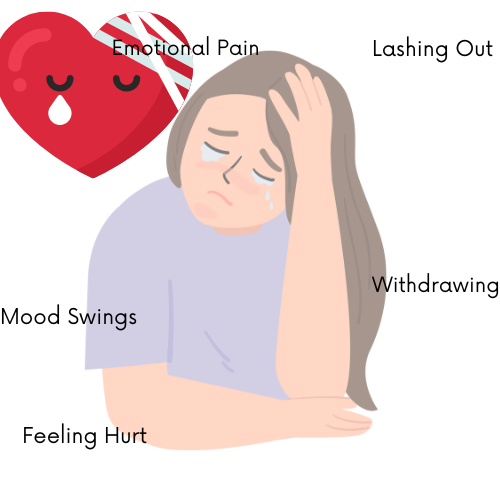
Someone doesn’t text back quickly enough and your stomach drops. A friend cancels plans and shame floods in before you have even processed what happened. Your manager gives feedback in a slightly flat tone and your whole body tightens, reading catastrophe in a voice that may have just been tired.
GET A FREE MINI WORKBOOK HERE
Within seconds, you are certain: you have done something wrong, they are angry with you, this relationship is damaged, maybe even over.
You may know, intellectually, that the reaction is probably bigger than the situation warrants. But knowing that does not slow it down. The pain is immediate, physical, and total — like a switch thrown in your nervous system, not a thought you are choosing to have.
Rejection sensitive dysphoria, or RSD, is an intense emotional reaction to perceived or actual rejection, criticism, failure, or disappointment. In women with ADHD, RSD often shows up as shame spirals, people-pleasing, conflict avoidance, emotional withdrawal, perfectionism, or sudden defensive anger. It is not a formal diagnosis, but it is commonly discussed as part of ADHD-related emotional dysregulation.
If you have ADHD, this kind of intensity is not a character flaw. It is part of the broader emotional dysregulation that is central to how the ADHD nervous system works.
What Is Rejection Sensitive Dysphoria in ADHD Women?
Rejection sensitive dysphoria — often shortened to RSD — is an intense emotional response to perceived or actual criticism, rejection, failure, or the sense that you have disappointed someone.
The word dysphoria means profound unease or distress, and that name fits the experience. This is not ordinary hurt feelings. It is a sudden, acute emotional reaction that can feel like falling through the floor.
RSD is closely linked to ADHD. It is not currently an official diagnostic criterion for ADHD, but many clinicians and ADHD specialists recognize rejection sensitivity as one of the most painful and disruptive forms of ADHD-related emotional dysregulation.
The mechanism is neurological. ADHD involves differences in dopamine and norepinephrine systems, which help regulate attention, motivation, reward processing, emotional braking, and the ability to filter incoming social signals. When rejection, criticism, or even the possibility of rejection enters the picture, the ADHD nervous system may respond before reflection has a chance to catch up.
What makes RSD especially difficult is that it can be triggered not only by actual rejection, but by perceived rejection. A delayed text, an ambiguous facial expression, a short reply, a distracted tone, or a change in someone’s energy can all set it off. The nervous system does not wait for confirmation. It reacts to signals.
RSD vs. Ordinary Rejection: Why This Feels Different
Everyone feels hurt when they are rejected or criticized. That is a normal human response and it is not what RSD describes.
The difference is in the intensity, the speed, and the physical quality of the experience. Ordinary hurt tends to arrive gradually, stay in proportion to the event, and respond to reassurance. RSD arrives instantly, often at full force, and does not always soften when the threat has passed or the situation clarifies. Reassurance can help in the moment — but the nervous system often ramps back up as soon as the next ambiguous signal arrives.
There is also a physical quality to RSD that people describe consistently: a blow to the chest, a wave of heat, a collapsing sensation. This is not metaphorical. The body activates as if under threat. Your sympathetic nervous system does not distinguish between a critical email and a physical danger. Both register as something to flee, fight, or freeze against.
It also carries a shame that ordinary hurt often does not. For many ADHD women, RSD episodes arrive with a narrative attached: I'm too much. I drive people away. I'm always getting this wrong. Those stories are not neutral observations. They are loaded with years of accumulated feedback — being told you were too sensitive, too intense, too dramatic — and they reinforce themselves every time an episode hits.
Common Symptoms of RSD in ADHD Women
RSD can look different from person to person, but many ADHD women describe a similar pattern: the emotional response arrives quickly, feels physical, and often comes with shame.
| Symptom | How It May Show Up |
|---|---|
| Sudden shame | Feeling like you have done something wrong after a small interaction |
| Emotional flooding | Feeling overwhelmed before you can think clearly |
| Physical pain | Tight chest, stomach drop, heat, nausea, or a collapsing sensation |
| People-pleasing | Trying to avoid disappointing anyone |
| Conflict avoidance | Staying silent instead of expressing needs or boundaries |
| Reassurance seeking | Asking repeatedly if someone is angry, upset, or disappointed |
| Withdrawal | Pulling away before someone else can reject you |
| Perfectionism | Trying to avoid criticism by doing everything “right” |
| Defensive anger | Reacting sharply when rejection or criticism feels threatening |
| Rumination | Replaying a conversation repeatedly to figure out what went wrong |
For many women with ADHD, these symptoms are intensified by years of masking, overaccommodating, and being told they are too sensitive, too emotional, or too much.
How RSD Shows Up in ADHD Women
RSD looks different across different people and different contexts, and in women it is often shaped by masking, socialization, and the particular expectations placed on women to manage relationships smoothly.
Some women turn RSD outward. They feel a surge of anger in the moment of perceived rejection — a flash of defensive fury that can be confusing both to themselves and the people around them. This can look like overreaction, volatility, or conflict. It passes quickly, but the damage to relationships in those moments can feel lasting.
More often in women, RSD turns inward. The pain becomes shame, withdrawal, and self-blame. You go quiet. You replay the interaction obsessively, looking for exactly what you did wrong. You pull back from the relationship preemptively, before you can be rejected again. You stop sharing ideas in meetings. You cancel plans with friends. You soften your needs to the point of invisibility because needing things at all feels like too much risk.
Many ADHD women become extraordinarily skilled at reading rooms and anticipating displeasure. This hypervigilance toward social signals is adaptive in the short term — it helps you avoid situations that might trigger RSD — but it is exhausting, and it slowly narrows your life. You stop taking creative risks. You stop saying no. You start shaping yourself around what you believe others need rather than what is true for you.
The people-pleasing pattern so common in ADHD women is frequently RSD-driven. The relentless effort to be agreeable, accommodating, and never disappointing is not a personality trait. It is a nervous system response to a very real and very painful experience.
How Rejection Sensitive Dysphoria Impacts Relationships
RSD shapes relationships in ways that can be hard to name without a framework. Partners, friends, and family members often experience the effects without understanding the cause.
Small miscommunications carry enormous weight. A partner's distracted response, a friend's casual cancellation, a parent's critical tone — these land differently when your nervous system is wired for this kind of sensitivity. What the other person experiences as a minor friction or a passing moment, you experience as potential rupture.
This creates cycles. You react strongly to a perceived slight. Your partner or friend feels confused by the intensity of the reaction and pulls back, trying to figure out what happened. That withdrawal reads as confirmation that you were right to be afraid. The original fear intensifies. Both people end up hurt and neither fully understands why.
For women with ADHD, RSD in relationships also frequently generates what looks like clinginess or a desperate need for reassurance. Needing frequent check-ins that things are okay, asking whether someone is angry with you, reading deeply into response times — these are not neediness as a character trait. They are attempts to regulate a nervous system that is running threat-detection constantly.
RSD also affects how you communicate conflict. Many ADHD women avoid conflict almost entirely because the fear of the other person's disappointment or anger is physically intolerable. This does not mean you don't have needs or boundaries — it means expressing them feels too dangerous. What results is often a pattern of silence followed by eventual explosion, neither of which reflects what you actually want.
How RSD Affects Work, Feedback, and Perfectionism
The professional costs of RSD are significant and rarely talked about.
Performance reviews are not just uncomfortable — they can send you into hours or days of shame spiral, even when the feedback is largely positive. Critical emails feel like verdicts. A quiet meeting room or a manager who seems distracted during a check-in can trigger a cascade of interpretation that has nothing to do with what's actually happening.
Many ADHD women with RSD underperform relative to their actual abilities because the fear of criticism forecloses risk-taking. You don't propose the idea. You don't apply for the promotion. You don't push back when a project scope expands unreasonably, because pushing back means risking disapproval and disapproval feels unbearable.
Perfectionism and RSD are deeply intertwined. Perfectionism in ADHD women is often not about wanting things to be excellent — it is about preventing the experience of criticism. If you can get it right enough, no one will have anything to say. The standard you hold yourself to is not aspiration. It is armor.
Imposter syndrome amplifies this further. When your nervous system tells you that any misstep will expose you as inadequate, you spend enormous energy maintaining a surface that will not invite criticism. That energy comes at a cost, and that cost compounds over years.
RSD Triggers in ADHD Women
RSD is often triggered by moments that seem small from the outside but register as relational danger inside the nervous system.
Common RSD triggers include:
| Trigger | Why It Can Feel So Intense |
|---|---|
| A delayed text response | The silence may feel like rejection or anger |
| A friend canceling plans | Cancellation may feel like proof that you do not matter |
| A partner becoming quiet | Ambiguity can feel like emotional withdrawal |
| Critical feedback | Even helpful feedback can feel like failure |
| A manager’s flat tone | Neutral communication may be interpreted as disapproval |
| Being left out | Exclusion can trigger shame and panic quickly |
| Making a mistake | A small error may feel like evidence of being inadequate |
| Disappointing someone | The possibility of letting someone down may feel unbearable |
The difficulty is not that ADHD women are “too sensitive.” The difficulty is that the nervous system can interpret ambiguous social information as threat before the thinking brain has time to evaluate what is actually happening.
How to Calm an RSD Episode
During an RSD Episode
RSD episodes are often fast and total. The emotional response usually arrives before you can think your way through it. You may feel a tightening in your chest, a flush of heat, a stomach drop, or a sudden urge to defend yourself, apologize, withdraw, or ask for reassurance.
That physical quality is a useful signal: this is a nervous system event, not necessarily an accurate reading of what is happening.
When you are inside an RSD episode, the goal is not to argue yourself out of the feeling. The goal is to help your nervous system come down enough that you do not have to act from inside the most painful part of the reaction.
Try this sequence:
- Pause before responding.
- Name what is happening: “This may be RSD.”
- Lengthen your exhale.
- Move your body or change your environment.
- Avoid sending the text, email, or message while flooded.
- Return to the conversation once your body has settled.
A useful phrase is:
“This is real pain, but it may not be accurate information yet.”
That distinction matters. The pain is real. The story your nervous system attaches to it may need more time and context.
Slow exhalation can help because extending the out-breath supports the parasympathetic nervous system. Movement, stepping outside, or changing your physical environment can also interrupt the loop by shifting sensory context.
The most important thing is to avoid acting from inside the episode when possible. Sending a defensive reply, withdrawing completely, or demanding reassurance while dysregulated often escalates the situation rather than resolving it. This is genuinely hard because the nervous system is urging immediate action.
Medication may also be part of the picture for some women. Stimulant medications that treat ADHD may reduce RSD reactivity for some people. Non-stimulant options, including guanfacine and clonidine, may also reduce the intensity or frequency of RSD episodes for some people. This is a conversation worth having directly with a prescribing provider.
Treatment and Support for Rejection Sensitive Dysphoria
There is no single treatment that makes RSD disappear completely, but the intensity and frequency of episodes can often be reduced with the right combination of ADHD support, nervous system regulation, therapy, medication, and relationship tools.
| Treatment Area | How It Can Help |
|---|---|
| ADHD-informed therapy | Helps identify RSD patterns, reduce shame, and build emotional regulation skills |
| Neurodivergent-affirming therapy | Supports the person without framing sensitivity as a character flaw |
| Medication consultation | Some ADHD medications may reduce emotional reactivity for some people |
| Nervous system regulation | Breathwork, movement, sensory grounding, and sleep support can lower baseline vulnerability |
| Relationship communication tools | Reduces ambiguity and helps partners understand what is happening |
| Workplace accommodations | Written feedback, processing time, and clear expectations may reduce RSD triggers |
| Self-compassion work | Helps reduce the shame spiral that often follows an episode |
Medication may be part of the picture for some women. Stimulant medications that treat ADHD may reduce RSD reactivity for some people. Non-stimulant options, including medications that affect the norepinephrine system, may also be worth discussing with a prescribing provider.
Therapy can also help by addressing the patterns that grow around RSD: people-pleasing, conflict avoidance, perfectionism, emotional withdrawal, shame, and fear of disappointing others.
The goal is not to become less sensitive. The goal is to become less governed by the fear of rejection.
RSD vs. Anxiety, Trauma, and BPD
Rejection sensitivity can overlap with other experiences, which is one reason it can be confusing to name. RSD is most often discussed in relation to ADHD, but intense rejection sensitivity can also appear alongside anxiety, trauma, or borderline personality disorder.
| Experience | What Can Look Similar | What May Be Different |
|---|---|---|
| RSD in ADHD | Intense pain after perceived rejection, criticism, or disappointment | Often sudden, physical, fast-moving, and connected to ADHD emotional dysregulation |
| Social anxiety | Fear of judgment, embarrassment, or being disliked | Often more anticipatory and persistent before social situations |
| Complex PTSD | Strong reaction to relational threat or emotional danger | Often connected to past trauma, attachment wounds, or chronic unsafety |
| Borderline personality disorder | Fear of abandonment and intense relational distress | Usually involves a broader pattern affecting identity, relationships, impulsivity, and emotional regulation |
This comparison is not meant to diagnose. Many people have overlapping experiences. A careful evaluation with a qualified clinician is more useful than trying to force your experience into one category.How the Empowerment Model Addresses RSD
Working with RSD is not about eliminating sensitivity. Sensitivity is not the problem. The problem is a nervous system that has not had the right support, and a set of coping patterns that were reasonable adaptations to real pain but that now limit your life. ADHD burnout is often the result when those coping patterns run for too long without relief.
Self-Awareness is the foundation. Understanding that what you experience as rejection sensitivity is neurological — not fragility, not character, not proof of being too much — changes the way you can work with it. You are not overreacting. You are having a specific, recognizable experience that has a name and a mechanism, and that means it is something you can approach with curiosity rather than shame.
Self-Compassion matters enormously with RSD because shame is so embedded in the experience. Years of being told you were too sensitive, too intense, too dramatic, have accumulated. Working through that accumulated self-criticism — not bypassing it, but genuinely metabolizing it — changes how you move through an episode. It becomes possible to be in pain without the layer of shame-about-the-pain on top of it.
Self-Accommodation means building your life and your environments in ways that reduce unnecessary RSD triggers where possible. It means creating communication agreements with partners and close friends so that ambiguous silence has an established default interpretation rather than an open one. It means structuring your work so that feedback comes in forms that give you time to process before you have to respond. It means recognizing your high-risk windows — when you are tired, hormonally shifted, or already depleted — and reducing exposure during them.
Self-Advocacy means being able to name what is happening and ask for what helps. Telling a partner: "When you go quiet I interpret it as anger — can we have a check-in signal?" Telling a manager: "Written feedback helps me process better than in-the-moment verbal feedback." This requires both the language and the sense of legitimacy that therapy often helps build.
Self-Care for RSD is about nervous system regulation as a daily practice rather than crisis management. Sleep, movement, predictable structure, reduced demands during high-vulnerability windows — these don't prevent RSD, but they change the baseline you are working from. A nervous system that is rested and resourced is more resilient than one running on depletion.
Frequently Asked Questions
Rejection sensitive dysphoria is an intense emotional response to perceived or actual rejection, criticism, failure, or disappointment. It is commonly associated with ADHD and often feels sudden, physical, and difficult to regulate in the moment.
RSD is most commonly discussed in relation to ADHD, but intense sensitivity to rejection can also appear in anxiety, complex trauma, borderline personality disorder, and other mental health conditions. In ADHD, RSD is often understood as part of emotional dysregulation and nervous system reactivity.
In women with ADHD, RSD often shows up as shame, people-pleasing, perfectionism, withdrawal, conflict avoidance, reassurance seeking, or emotional masking. Many women turn the pain inward and blame themselves instead of recognizing the reaction as part of ADHD-related emotional dysregulation.
RSD can make small moments in relationships feel much larger than they are. A delayed reply, distracted tone, canceled plan, or quiet mood may feel like rejection. This can lead to reassurance seeking, withdrawal, conflict avoidance, or sudden defensive reactions.cccccccc
The most reliable immediate intervention is anything that activates the parasympathetic nervous system. Extended exhalation — making the out-breath longer than the in-breath — directly counteracts the sympathetic arousal of the episode. Physical movement, particularly walking or stepping outside, can interrupt the loop by shifting your sensory environment. Naming the experience explicitly — "this is RSD, this is a nervous system event" — creates a small separation between the pain and the interpretation of the pain. Avoiding reactive communication until the acute phase passes, if at all possible, prevents most of the secondary damage. Longer term, ADHD medication — both stimulants and certain non-stimulants — can significantly reduce the frequency and intensity of episodes.
Many people describe RSD as a physical wave of pain. It may feel like a stomach drop, chest tightness, heat, nausea, collapse, or a sudden urge to escape, defend, apologize, or disappear.
At work, RSD can make feedback, performance reviews, criticism, or unclear communication feel overwhelming. Many ADHD women avoid risks, overprepare, people-please, or become perfectionistic to prevent the pain of being criticized.
The most helpful first step is to avoid reacting immediately. Naming the experience, lengthening the exhale, moving the body, stepping outside, or changing the sensory environment can help the nervous system settle. Once the acute intensity passes, it becomes easier to interpret the situation more accurately.
Medication may help some people with ADHD-related emotional reactivity. Stimulant medications and some non-stimulant medications may reduce the intensity or frequency of RSD episodes for certain people. This should always be discussed with a qualified prescribing provider.
No. RSD and social anxiety can overlap, but they are not the same. Social anxiety often involves ongoing fear of judgment or embarrassment, especially before social situations. RSD is often more sudden and is triggered by perceived rejection, criticism, failure, or disappointment.
No. RSD is not currently a formal diagnosis in the DSM. It is a clinical term used to describe a common and painful pattern of intense rejection sensitivity, especially in people with ADHD.
You Are Not Too Much
Replace the final CTA with this slightly more keyword-aligned version:
If rejection sensitivity, shame spirals, people-pleasing, or emotional dysregulation are shaping your relationships or work life, ADHD-informed therapy can help.
I offer neurodivergent-affirming therapy for women in North Carolina and South Carolina via telehealth.
Continue Exploring
- ADHD and Shame
- ADHD and People-Pleasing
- ADHD Hyperresponsibility
- ADHD Burnout vs Depression
- ADHD and Nighttime Anxiety
- ADHD and Emotional Dysregulation
- ADHD Masking in Women
- ADHD and Dating
- ADHD and Relationship Abuse
If you're ready to work with someone who understands how ADHD actually feels from the inside, I'd be glad to connect.
I offer neurodivergent-affirming therapy for women in North Carolina and South Carolina via telehealth.
Learn more about working with me →
You can also find my profile on Psychology Today or reach me directly at kristenlynnmcclure@gmail.com.
