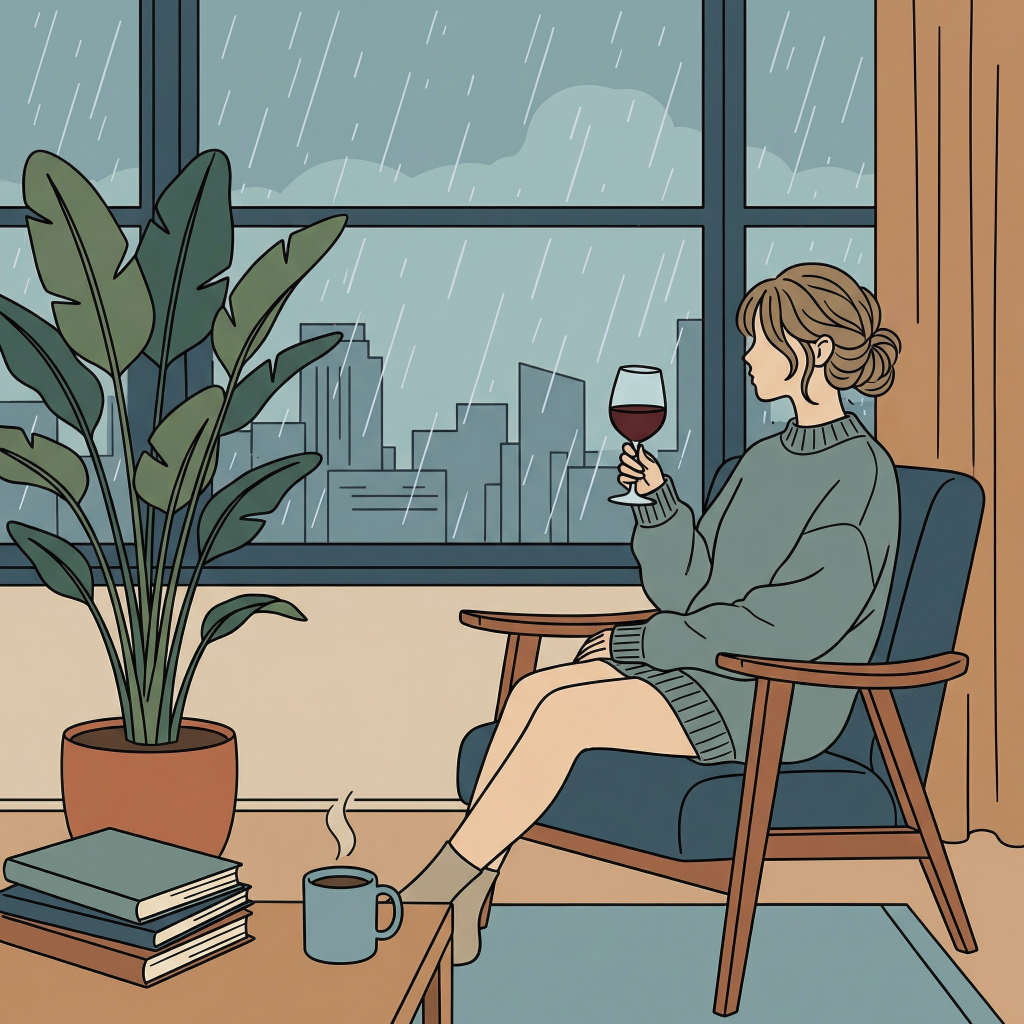
You know the feeling.
The end of a hard day — managing too much, holding too many things in your head, performing composure when you were anything but composed.
A drink arrives.
And for a little while:
-
The mental chatter slows.
-
The hypervigilance softens.
-
The self-criticism quiets.
-
You can just exist.
That relief is real.
Women with ADHD are significantly more likely than the general population to develop problematic relationships with alcohol and other substances. This connection is not about character or willpower. It is rooted in neurobiology, dopamine regulation, and chronic nervous system strain.
Understanding that mechanism changes the conversation.
Why ADHD and Alcohol Are So Closely Connected
Research consistently demonstrates that individuals with ADHD are at elevated risk for substance use disorders. The association is well established — and particularly relevant for women, whose ADHD often goes unrecognized for years.
At the core of this connection is dopamine.
The Dopamine System
ADHD involves dysregulation of the brain’s reward and motivation network. Dopamine plays a central role in:
-
Motivation
-
Task initiation and completion
-
Emotional regulation
-
Satisfaction
-
The ability to settle after effort
In ADHD brains, dopamine activity is often underactivated in ways that create a chronic “seeking” state — restlessness, difficulty settling, and a persistent pull toward stimulation or relief.
Alcohol temporarily increases dopamine availability.
It also dampens activity in the prefrontal cortex — the region involved in self-monitoring and inhibition. For many women with ADHD, that internal monitoring system runs loudly and relentlessly.
In other words: drinking works.
For a few hours, it provides something the ADHD brain is genuinely struggling to generate on its own.
That short-term effectiveness is precisely why patterns develop.
How This Pattern Often Develops in Women
For many women, this does not begin with recreational excess.
It begins with coping.
Especially for women who:
-
Were diagnosed late — or not at all
-
Spent years masking symptoms
-
Internalized anxiety and perfectionism
-
Function well externally but feel chronically overwhelmed internally
By the time alcohol becomes a regular evening ritual, it is often serving a specific function: quieting a brain that does not quiet easily on its own.
The escalation is usually gradual.
One drink becomes two.
Weekends become weekdays.
The relief window shortens.
Morning anxiety intensifies.
At that point, two forces are interacting:
-
The original ADHD-related dysregulation
-
Alcohol’s rebound effects on sleep, mood, and dopamine baseline
This is the self-medication cycle — not a moral failure, but a neurobiological loop.
What Alcohol Actually Does to the ADHD Brain
Understanding the short-, medium-, and long-term effects helps clarify why this pattern becomes self-reinforcing.
Short Term
Alcohol can:
-
Reduce anxiety
-
Decrease hyperactivity
-
Slow racing thoughts
-
Create temporary emotional ease
The relief is not imagined.
Medium Term
As a central nervous system depressant, alcohol:
-
Disrupts sleep architecture
-
Increases next-day anxiety
-
Lowers dopamine baseline
-
Impairs executive functioning
For someone with ADHD, the “morning after” brain is often more dysregulated than baseline.
Long Term
Regular alcohol use further alters dopamine regulation and increases tolerance. Over time:
-
More alcohol is required for the same effect
-
Baseline restlessness increases
-
Emotional regulation becomes harder without it
The very thing that relieves symptoms short term deepens them long term.
Willpower is not the appropriate intervention for a dopamine-regulation issue.
ADHD, Alcohol, and Late Diagnosis in Women
In clinical practice, it is common to see alcohol use patterns shift after an ADHD diagnosis.
Many women are initially treated for:
-
Anxiety
-
Depression
-
Insomnia
While underlying ADHD remains unrecognized.
When ADHD is properly identified and treated — sometimes including stimulant medication — the chronic “seeking” state often decreases. In some cases, alcohol use reduces as a secondary effect of improved regulation.
This does not eliminate the need to address drinking directly when it has become problematic. But it reframes it.
Alcohol is often functioning as compensation for untreated neurobiology.
Without treating the ADHD, the cycle tends to persist.
The Shame That Keeps It Hidden
Most women are not talking openly about this.
Particularly:
-
Mothers
-
High-achieving professionals
-
Women who appear highly capable
-
Women who “know better”
The internal narrative often sounds like:
-
“I should be able to stop.”
-
“Why can’t I control this?”
-
“What is wrong with me?”
What is happening is not a character defect.
It is a nervous system attempting to regulate itself with the tools available.
Shame obscures the mechanism.
When the mechanism is misunderstood, treatment becomes misdirected.
Signs the Relationship May Be Becoming Problematic
There is no single threshold. But questions worth considering include:
-
Has your drinking gradually increased over time?
-
Do evenings feel difficult to manage without alcohol?
-
Have you attempted to cut back and found it harder than expected?
-
Does alcohol help you fall asleep but wake you during the night?
-
Do you experience disproportionate shame about your drinking?
-
Has someone close to you expressed concern?
These are not diagnostic criteria — they are prompts for reflection.
What Actually Helps
Effective support typically involves addressing the underlying ADHD directly.
This may include:
-
Comprehensive ADHD assessment
-
Medication management when appropriate
-
Therapy informed by ADHD neurobiology
-
Exercise and sleep stabilization
-
Development of alternative regulation strategies
Approaches focused solely on self-control or abstinence, without addressing dopamine dysregulation, often fail to resolve the core issue.
When alcohol becomes the primary way an ADHD nervous system finds relief, it is not simply a behavioral issue. It is a treatment issue.
Women with ADHD are not weak for seeking relief.
They are responding to a brain that has been working overtime for years.
The relief alcohol provides is real.
So is the cost.
Understanding the distinction — and addressing the neurobiology beneath it — changes outcomes.
I am Kristen McClure, a Licensed Clinical Social Worker specializing in ADHD in women. I offer neurodivergent-affirming telehealth therapy and take the whole picture seriously.
Learn more about ADHD therapy for women or reach out to talk about where you are.
Related reading:
- ADHD and Emotional Dysregulation in Women
- ADHD Burnout in Women
- ADHD and Shame in Women
- ADHD and Sleep in Women
-
Medical Disclaimer:

This content is provided for informational and educational purposes only and does not constitute medical, psychiatric, or psychological advice. It is not a substitute for professional evaluation, diagnosis, or treatment. Reading this article does not establish a therapeutic relationship. If you are experiencing concerns related to alcohol use, withdrawal symptoms, mental health distress, or safety issues, seek immediate support from a licensed healthcare provider or emergency services in your area.
