Understanding Dopamine: The Brain’s Chemical Messenger Dopamine is a neurotransmitter that plays a crucial role in how we feel pleasure, think, and plan. It’s heavily involved in the brain’s reward system. Dopamine helps us keep going when we want to quit and helps us feel good when we accomplish things. …
 Kristen McCLure MSW LCSW
 Why ADHD Makes Now So Tempting: A Guide to Temporal Discounting
What is Temporal Discounting? Temporal discounting is when you prioritize immediate, smaller rewards over tasks with long-term benefits. ADHD brains have a preference for this, which can lead to challenges in getting tasks done at work, managing finances, and maintaining self-care. But remember, this isn’t your fault—it’s just how your …
ADHD and Progressive Muscle Relaxation
Living with ADHD often involves managing a complex array of “symptoms” such as restlessness, impulsivity, and persistent mental chatter. Progressive Muscle Relaxation (PMR) is a scientifically supported technique that can significantly help reduce these “symptoms ” by teaching individuals to alternate between tensing and relaxing different muscle groups. This …

ADHD Masking in Women: Signs, Causes, and the Hidden Cost
You look like you have it together. You meet expectations. You show up. You get things done. But underneath that, there’s constant effort — tracking, remembering, managing, holding everything in place so nothing slips. And most of the time, no one sees how hard it actually is. This is often …
ADHD and the Default Mode Network
What is the Default Mode Network (DMN)? The Default Mode Network (DMN) is a network of interconnected brain regions that is most active when the mind is at rest, such as during daydreaming, introspection, or mind-wandering. This network plays a critical role in self-referential thoughts, memory retrieval, and envisioning the …
Understanding the Connection Between Alexithymia and ADHD
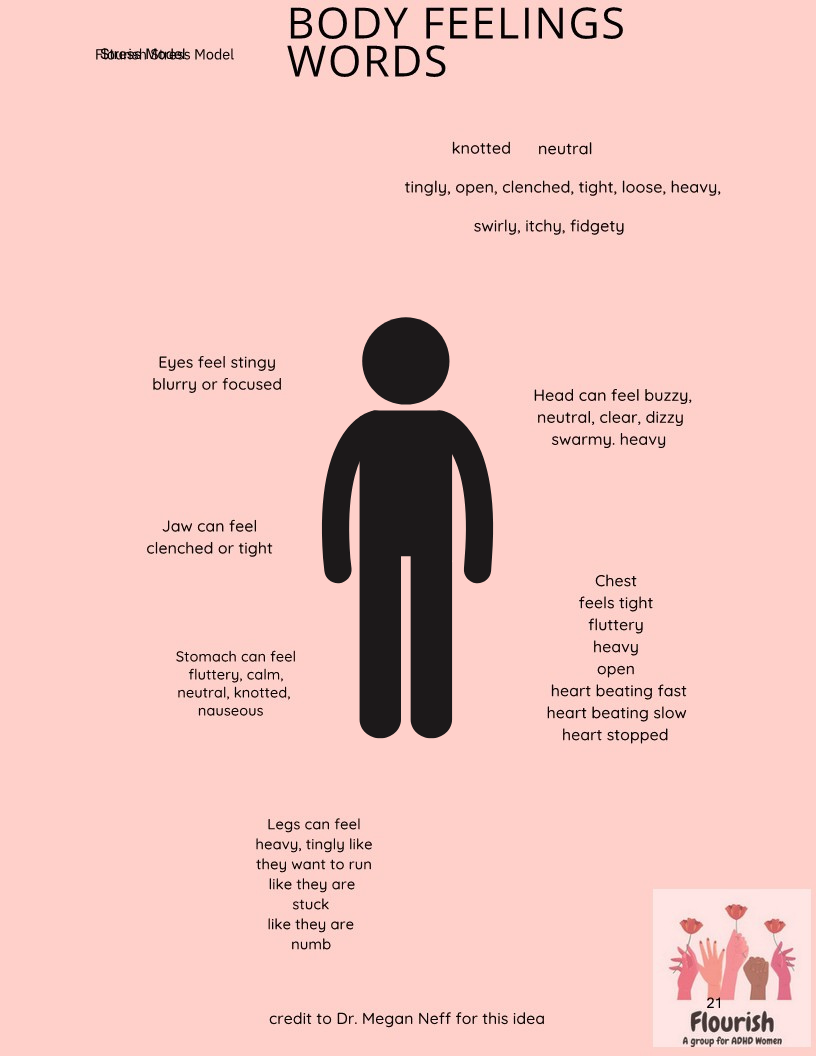
Understanding the Link Between Alexithymia and ADHD Alexithymia refers to difficulty in identifying and describing emotions. Initially recognized in the 1970s, it’s now understood as a personality trait impacting both psychological and physical health. Although not classified as a distinct disorder, alexithymia significantly affects emotional processing and regulation in various …

ADHD Women and Fibromylagia
🗝️ TLDR/ Key Takeaways Overlap: Fibromyalgia and ADHD often co-occur, sharing symptoms like pain, fatigue, and cognitive challenges. Treatment: Addressing ADHD can lead to improvements in fibromyalgia symptoms, particularly cognitive issues like fibrofog. Holistic Approach: Combining medications, therapy, and lifestyle changes is often the most effective strategy. Self-Help: Incorporating stress …

Adhd and Disordered Eating
ADHD Women and Food Issues: Exploring Eating Disorders and Interoception Introduction Understanding the relationship between ADHD in women and eating disorders is crucial for developing effective treatment approaches. Recent research highlights the importance of interoception—the perception of internal bodily sensations—and its impact on eating behaviors. This blog explores the complexities …

The Relationship Between Fidgeting and ADHD: Benefits, Tools, and Tips
The Relationship Between Fidgeting and ADHD: Understanding the Connection Does Fidgeting Help Adhd People? Fidgeting and ADHD Fact Sheet (1) 🌟 Fidgeting, often seen as a distraction, can actually be a key to unlocking the brain’s full potential, especially for individuals with ADHD. By understanding the science and benefits behind …

Adhd and Postpartum Depression
Postpartum depression affects many new mothers.In ADHD women, it is substantially more common and often more disabling. Large population studies show that: About 3% of women without ADHD are diagnosed with postpartum depression About 16–17% of women with ADHD are diagnosed with postpartum depression Postpartum anxiety follows a similar pattern: …