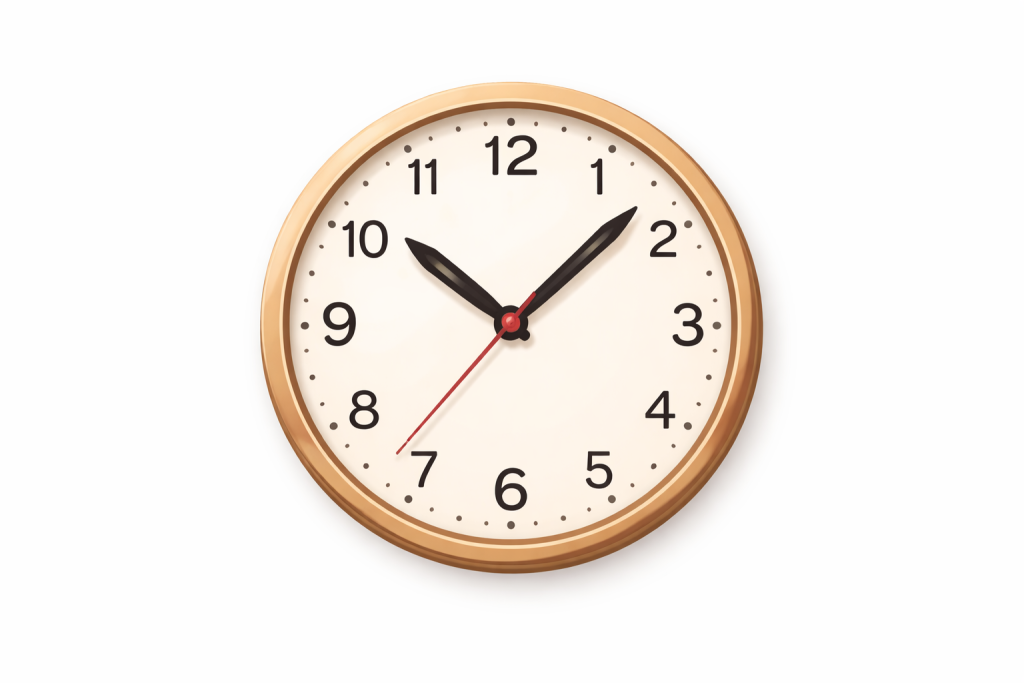
Time blindness in ADHD is the difficulty many ADHD people have with sensing time, estimating how long things will take, and staying connected to future time until it suddenly feels urgent.
This page is part of our executive functioning hub
It is one of the most common and most frustrating executive functioning struggles behind chronic lateness, missed transitions, procrastination, and the feeling that the day got away from you again.
On the outside, it can look like disorganization, poor planning, or not trying hard enough. In reality, it is often a problem with time awareness, planning, and follow-through.
For many women, this becomes a shame issue long before it is recognized as an ADHD issue. You may have spent years blaming yourself for running late, underestimating tasks, forgetting how long things take, or feeling constantly behind. Understanding time blindness helps shift the frame. This is not about laziness or lack of care. It is about how ADHD affects executive functioning, attention, and the lived experience of time.
Time blindness can affect getting out the door, meeting deadlines, starting tasks, switching activities, and planning a realistic day.
What Is Time Blindness in ADHD?
Time blindness refers to difficulty sensing the passage of time, estimating time accurately, pacing yourself across time, and linking what you are doing now to what will matter later.
It is a common ADHD-related executive functioning problem. It is not a separate diagnosis, but it is a pattern many ADHD adults know well.
This can look like:
🔵 underestimating how long it will take to get ready
🔵 feeling shocked that an hour has passed
🔵 forgetting future tasks unless something external reminds you
🔵 putting something off because it does not feel real yet
🔵 running late even when you planned not to
🔵 repeating the same time mistakes again and again
Time blindness is one reason ADHD people often feel confused by time. A deadline may seem far away until suddenly it feels immediate. A task that looks like ten minutes may take forty-five. A plan that seemed realistic in the morning may fall apart by early afternoon.
What Causes Time Blindness in ADHD?
Time blindness is not caused by one single thing. It usually grows out of several ADHD-related patterns happening at once.
Executive functioning differences
Executive functions help you plan, sequence, prioritize, shift, and manage tasks over time. When these systems are strained, it becomes much harder to build a realistic schedule, estimate duration, and follow through in a steady way.
Working memory strain
Working memory helps you hold information in mind while you do something else. If you are trying to get ready, remember three other tasks, respond to a text, and keep track of the clock, time can easily drop out of awareness.
“Now” and “not now”
Many ADHD people do not experience time as a smooth continuum. A lot of tasks fall into one of two categories: now or not now.
If something is not happening right now, it may not feel emotionally real, concrete, or motivating yet. Then the deadline gets close, urgency kicks in, and the nervous system has to do the work that structure was supposed to do.
Uneven time perception
ADHD does not only affect planning. It can also affect the subjective experience of time.
During hyperfocus, time can disappear. During boring, repetitive, or effortful tasks, time can drag. That inconsistency makes it harder to pace yourself and trust your own sense of duration.
Common Signs of Time Blindness in ADHD
Difficulty estimating how long things will take
This is one of the clearest signs. You may think a task will take fifteen minutes and later realize it needed forty-five. Or you may avoid a task because it feels huge, only to find that it was shorter than your brain expected.
Procrastination that turns into urgency
A task may sit in the background until the deadline suddenly feels real. Then motivation shows up, but so do stress and panic. This is one reason ADHD women often end up doing important things at the last minute even when they care deeply about doing them well.
Trouble planning a realistic schedule
If time does not feel solid, it is easy to overpack the day, underestimate transitions, or forget about prep time, travel time, recovery time, and interruptions.
On paper the day may look possible. In real life it often is not.
Problems remembering to do things later
Time blindness often overlaps with prospective memory problems. That means it is hard to remember to do something at the right time unless there is an external cue.
Feeling rushed all the time
Many ADHD women feel behind even when there technically was enough time. Often the missing piece is that the plan did not account for activation time, emotional resistance, transitions, distractions, or the real amount of effort the task required.
Repeating the same time mistakes
You may notice that you keep making the same timing errors. This is not because you do not care. It is often because past timing experiences do not automatically turn into accurate future planning.
How Time Blindness Affects Daily Life
Time blindness is not only about being late. It can affect almost every part of daily life.
Getting out the door
Many women underestimate how long it takes to shower, get dressed, gather what they need, respond to one last thing, and transition out the door. The result is a rushed, stressful start and a lot of self-criticism.
Work and deadlines
Time blindness can make it hard to break work into stages, start early enough, estimate how long projects will take, and leave time for editing, review, or follow-up. This often creates a cycle of urgency, exhaustion, and shame.
Home tasks and chores
Daily tasks can be difficult to start, hard to pace, and easy to lose track of. A quick errand becomes a long detour. A short household task gets delayed because your brain cannot feel when to begin.
Transitions
Switching from one task to another is often harder than it looks. You may know you need to stop, but your brain does not shift easily. This is especially true when you are absorbed, emotionally activated, or mentally tired.
Appointments and time-based commitments
Many ADHD women do not trust themselves with timing, so they either run late or become consumed with not being late. Sometimes the whole day starts organizing itself around one later appointment because it is hard to judge what fits safely before it.
Relationships and reliability
Time blindness can affect trust and connection. Other people may interpret lateness, missed follow-through, or poor timing as a lack of care. When this happens repeatedly, it can create conflict, resentment, and a painful sense that you keep disappointing people.
How Time Blindness Actually Feels
For many women, time blindness feels like:
🔵 time disappears when you are absorbed
🔵 time drags when something is dull or effortful
🔵 the future does not feel real until it is too close
🔵 the day moves faster than your brain expected
🔵 there is never enough room between one thing and the next
🔵 you are always trying to catch up
Over time, these struggles can start to shape self-trust. Instead of seeing a neurological pattern, you may start seeing yourself as careless, inconsistent, or incapable. That is often where the emotional damage happens.
The Emotional Impact of Time Blindness
Time blindness often becomes a shame issue long before it gets understood as an ADHD issue.
Many women have spent years being described as unreliable, careless, lazy, scattered, irresponsible, or bad at time. Over time, that can erode confidence and make ordinary planning feel loaded with dread.
Every missed deadline, rushed exit, forgotten task, or late arrival can reinforce an old story about who you are.
This is one reason self-criticism usually does not help. Shame does not improve time awareness. It usually makes planning, initiation, and follow-through harder.
A more useful approach is to understand the mechanism clearly and then build support around it.
Why Traditional Time Management Advice Often Fails ADHD
A lot of standard time management advice assumes you have a fairly reliable internal sense of time.
That is why “just use a planner” often does not solve the problem. The issue is not only having a planner. The issue is remembering to look at it, feeling future tasks as real, estimating time accurately, and shifting attention when it is time to move on.
ADHD-friendly support works better when it makes time external and visible instead of expecting you to sense it internally.
What Helps with Time Blindness in ADHD
The goal is not to become a different kind of brain. The goal is to make time easier to see, easier to feel, and easier to work with.
If you lose track of time
🔵 use visual timers
🔵 keep analog clocks where you can see them
🔵 set recurring alarms for transitions
🔵 use verbal reminders or smart speaker prompts
🔵 check the clock before and after starting something
If you underestimate how long tasks take
🔵 time common tasks and write down the real duration
🔵 add buffer time to anything with a deadline
🔵 plan for prep time, cleanup time, and transition time
🔵 use backward planning from the actual deadline or departure time
If you have trouble getting started early enough
🔵 break the task into smaller steps
🔵 decide what the first visible action is
🔵 create an earlier false deadline
🔵 use body doubling or accountability
🔵 make the next step concrete, not vague
If you struggle to stop one task and switch to another
🔵 use stopping cues and transition alarms
🔵 build in a short closing routine
🔵 set a warning alarm before you actually need to leave
🔵 avoid assuming you will “finish one more thing” in time
If you forget things that are supposed to happen later
🔵 do not rely on memory alone
🔵 use calendar blocks, reminders, sticky notes, and visual cues
🔵 anchor important tasks to routines you already do
🔵 make the reminder show up where the task happens
It can also help to start noticing your own patterns:
🔵 Which tasks always take longer than expected?
🔵 Which parts of the day are hardest to pace?
🔵 Where do transitions tend to break down?
🔵 What needs an external cue instead of a good intention?
🔵 What situations make time disappear completely?
Time Blindness in ADHD Women
Time blindness often carries a particular kind of shame for women.
Many women are diagnosed later, after years of being misunderstood. Before diagnosis, time problems are often framed as personal failure rather than a neurodevelopmental pattern.
Women are also often expected to manage a great deal of invisible labor: appointments, planning, caregiving, household logistics, emotional labor, and being “on top of things.” When time blindness affects those areas, the self-blame can run deep.
Some women also spend years masking their struggles by overcompensating, arriving excessively early, staying in a state of constant vigilance, or exhausting themselves trying to never drop anything. That can look organized from the outside while feeling fragile and unsustainable on the inside.
Hormonal shifts can also make executive functioning and planning feel less stable at certain times, which may make time-related struggles feel harder to manage.
When Support May Help
If time blindness is affecting work, relationships, self-trust, or daily functioning, support can help.
That support may include:
🔵 ADHD-informed therapy
🔵 executive functioning coaching
🔵 medication support from a prescribing clinician
🔵 practical planning systems
🔵 accountability and external structure
🔵 support that helps reduce shame, not increase it
The goal is not perfect time management. The goal is making daily life more workable, more predictable, and less punishing.
Frequently Asked Questions About Time Blindness in ADHD
Is time blindness a symptom of ADHD?
It is not a separate diagnostic criterion on its own, but it is a very common ADHD-related executive functioning pattern.
Is time blindness the same as procrastination?
No. Time blindness is difficulty perceiving and managing time. Procrastination is delaying a task. They often interact, but they are not the same thing.
Why do ADHD people underestimate how long things take?
Because ADHD can affect planning, working memory, sequencing, time awareness, and the subjective experience of effort. It is often hard to accurately predict how long something will take when those systems are under strain.
Why do ADHD people lose track of time?
Executive functioning differences, working memory strain, hyperfocus, distraction, and transition difficulty can all make time harder to track.
Is time blindness the same as executive dysfunction?
Not exactly. Time blindness is one way executive dysfunction can show up. Executive dysfunction is broader and includes planning, starting, organizing, prioritizing, shifting, and follow-through.
Can medication help with time blindness?
For some people, medication improves attention and executive functioning enough that time awareness gets easier. It does not solve everything, but it can help.
Can adults have time blindness without realizing it is ADHD?
Yes. Many adults spend years thinking they are simply bad at time, unreliable, or disorganized before they understand that ADHD may be part of the picture.
Related ADHD Patterns
Time blindness often overlaps with other ADHD struggles. It can show up alongside task paralysis, executive functioning difficulties, chronic lateness, and overwhelm.
If those are part of the picture for you, they are usually connected. The more clearly you understand the pattern, the easier it becomes to use support that fits.
