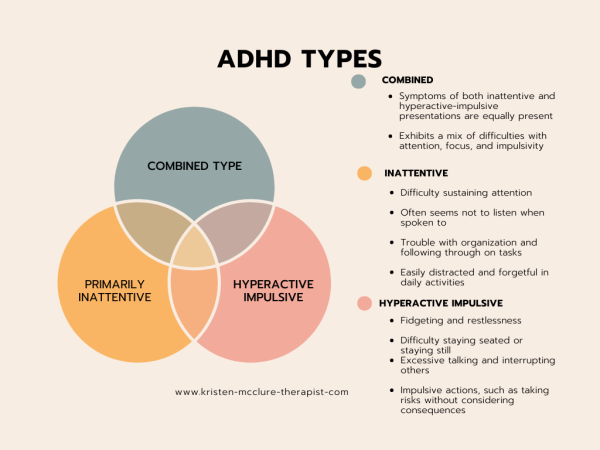
Most ADHD symptom lists were built around how ADHD looks in boys. They focus on visible hyperactivity, classroom behavior, and disruption that other people can easily see.
That leaves many ADHD women feeling confused. Their symptoms are real, but they often look quieter, more internal, and easier to misunderstand. Instead of obvious hyperactivity, ADHD women may deal with mental restlessness, emotional flooding, time blindness, chronic disorganization, shame, and years of compensating so well that the struggle stays hidden.
This page explains what ADHD symptoms in women actually look like in daily life. It is organized by symptom domain so you can understand the patterns more clearly and see why they are often missed.
If you are looking for a broader overview of ADHD in women, including why it gets missed and what to do about it, see: ADHD in Women: What It Really Looks Like
What ADHD Symptoms in Women Can Look Like
ADHD symptoms in women often look different from the stereotype many people were taught.
Many ADHD women are not the loud, disruptive child people picture when they hear the word ADHD. They may have been quiet, bright, anxious, high-achieving, emotionally intense, chronically overwhelmed, or constantly exhausted from trying to keep up.
ADHD in women often shows up through:
-
inconsistent attention
-
internal hyperactivity
-
emotional dysregulation
-
executive functioning difficulties
-
working memory problems
-
chronic overcompensation
-
a long history of self-blame
Many women spend years assuming these experiences reflect personality, stress, laziness, anxiety, or personal failure. They do not realize there is a neurological pattern underneath them.
Inattention Symptoms in Women
Inattention is the symptom cluster most commonly seen in ADHD women, and it is one of the easiest to miss.
Difficulty sustaining attention on low-interest tasks
ADHD attention is often interest-driven. Many ADHD women can focus very well when something feels urgent, novel, emotionally meaningful, or genuinely interesting. The difficulty usually shows up when a task is repetitive, administrative, slow, or boring.
This can look like reading the same paragraph several times, putting off paperwork, struggling to answer email, or sitting in front of a task and feeling unable to get traction.
Attention that goes where it wants
Many ADHD women do not feel like they lack attention. They feel like they do not fully control where attention goes.
A conversation starts, a detail catches your mind, and suddenly you are somewhere else internally. You come back and realize you missed part of what was said. The same thing can happen while reading, driving, sitting in meetings, or trying to finish something important.
Hyperfocus on what is engaging
The same person who cannot start a routine task may spend hours deeply focused on something interesting. This confuses a lot of women and makes them question whether ADHD really fits.
Hyperfocus does not cancel out ADHD. It is part of the pattern. The problem is inconsistency. Focus is often available under the right conditions, then inaccessible when needed most.
Working memory gaps
Working memory is the ability to hold information in mind long enough to use it. ADHD affects this directly.
This can look like:
-
walking into a room and forgetting why
-
losing your thought mid-sentence
-
forgetting part of an instruction before you finish hearing it
-
knowing you had something important to do and being unable to retrieve it
-
needing to write everything down immediately
This kind of forgetting can be unsettling. Many women start doubting themselves because their memory feels unreliable.
Losing things and missing details
Keys, glasses, phone, paperwork, items placed somewhere “safe.” These problems are common in ADHD because the moment of putting something down often does not get enough attention to be remembered later.
The same pattern affects details. Women may make mistakes on things they fully understand, miss one important part of a task, or overlook steps even when they care deeply about doing things well.
Difficulty following through
A task gets started and then stalls. A message gets mentally drafted and never sent. A form gets mostly finished and then sits there. A project reaches the last ten percent and remains incomplete.
This often gets misread as poor discipline or lack of caring. In ADHD, it is often a problem with initiation, sequencing, and follow-throug
Hyperactivity Symptoms as They Appear in Women
Hyperactivity in ADHD women is often internal. That is one reason it gets missed.
Internal restlessness
Many ADHD women describe a constant internal hum. They feel driven, keyed up, unable to fully settle, or like they need to keep moving even when their body is technically still.
This can show up as:
-
fidgeting
-
shifting positions often
-
tapping
-
pacing
-
feeling physically uncomfortable in still environments
Racing thoughts
For many women, hyperactivity lives in the mind.
Thoughts move quickly. Several mental tracks run at once. One thought leads to five more. There may be lists, worries, ideas, replayed conversations, plans, unfinished tasks, and sensory input all competing at once.
This is one reason rest can feel so difficult. The body may stop, but the mind does not.
Talking fast or talking a lot
Verbal impulsivity often gets overlooked in women. It may look like:
-
talking quickly
-
interrupting
-
finishing other people’s sentences
-
blurting something out because it feels like the thought will disappear
-
saying more than intended
This is often interpreted as enthusiasm, intensity, or personality. Sometimes it is. Sometimes it is also ADHD.
Difficulty relaxing
Many ADHD women find unstructured rest surprisingly hard.
The nervous system may seek stimulation even during downtime. This can look like scrolling while watching television, listening to something while doing another task, or feeling uncomfortable with quiet, stillness, or open-ended rest.
Impulsivity Symptoms in Women
Impulsivity is not only physical. In women it often appears through speech, emotion, decisions, spending, and response style.
Acting before thinking
This can look like saying yes before checking capacity, buying something before thinking through the cost, committing too quickly, or starting a new plan before the last one is finished.
The pause between urge and action can be shorter than a woman wants it to be.
Interrupting and intruding
Many ADHD women interrupt without wanting to be rude. The thought arrives with urgency and feels easy to lose. That creates pressure to say it quickly.
This can create misunderstanding in relationships, especially when the woman cares deeply and is trying hard to be present.
Emotional impulsivity
Emotional responses may come fast. Words can come out sharply. Tears may arrive quickly. Frustration can spill over before there is time to organize it.
This is one reason many ADHD women describe themselves as “too much” or “too sensitive.” Often they are responding from a nervous system that activates quickly and takes longer to settle.
Difficulty waiting
Waiting can feel physically and emotionally uncomfortable. Slow replies, long lines, delayed plans, or unclear timelines may trigger agitation out of proportion to the situation.
This is not just impatience. It is often part of the ADHD restlessness pattern.
Emotional Symptoms
Emotional symptoms are some of the most significant and underrecognized parts of ADHD in women.
Emotional dysregulation
ADHD affects emotional regulation as much as attention. Feelings may arrive quickly, feel intense, and take longer to settle.
This can look like:
-
getting flooded quickly
-
needing more recovery time after conflict
-
feeling deeply affected by small disruptions
-
struggling to shift out of frustration, shame, or hurt
Many women have been told they are overreacting when what is actually happening is poor regulation capacity under stress.
Rejection sensitivity
Criticism, exclusion, disapproval, or even an ambiguous shift in tone can land very hard. A missed text, a short reply, or a comment from a supervisor may trigger a strong reaction that feels immediate and difficult to manage.
For some women this fits the pattern of Rejection Sensitive Dysphoria. When that is present, the emotional pain around criticism or perceived rejection can feel intense and destabilizing.
Shame and demoralization
Years of forgetting, missing things, struggling to follow through, or disappointing yourself can create a deep shame pattern.
Many ADHD women carry a long history of trying very hard and still feeling inconsistent. Over time, that often turns into self-criticism, self-doubt, and a painful loss of trust in themselves.
Low frustration tolerance
Small barriers can feel much bigger than they look from the outside. A simple interruption, one missing step, a confusing instruction, or a plan change can create a level of frustration that feels hard to contain.
This happens in part because executive functioning helps regulate frustration, and ADHD affects executive functioning directly.
Executive Function Symptoms
Executive functioning is one of the most important areas to understand in ADHD women because it affects daily life so directly.
Time blindness
Many ADHD women have difficulty accurately sensing time. Things take longer than expected. Time passes without being noticed. Deadlines that seemed far away suddenly feel immediate.
This can lead to:
-
chronic lateness
-
rushing
-
missed appointments
-
difficulty planning realistically
-
a constant sense of being behind
Task paralysis
A woman may know exactly what needs to be done, care about doing it, and still feel unable to start.
This is one of the most painful ADHD experiences because it creates a gap between intention and action that other people often do not understand.
Difficulty prioritizing
When everything feels equally urgent, it becomes hard to decide what matters most. Some women freeze because they cannot sort the demands. Others bounce between tasks and make little progress on any of them.
Difficulty transitioning
Shifting from one task to another can take more effort than expected. Stopping one thing and starting the next may feel surprisingly hard, even when the next task is important.
This affects routines, workdays, bedtime, getting out the door, and almost every part of ordinary life.
Planning and sequencing problems
Multi-step tasks often break down in the execution. The plan may exist mentally, but carrying it through in order is hard.
This is one reason daily life can feel more effortful. Ordinary responsibilities require much more planning, tracking, remembering, and restarting than people outside the experience often realize.
Clinical descriptions only go so far. In ordinary life, ADHD symptoms in women often look like this:
-
the house that would be manageable if you could just get started
-
the email inbox full of messages that need decisions
-
the bill you remembered at the worst possible time
-
the friend you care about and still lose track of
-
the appointment you were late to even though you were trying not to be
-
the good idea you forgot to write down
-
the conversation you had to reconstruct from context
-
the project you wanted to do and still did not start
-
the exhaustion that builds from holding so much together internally
This is where many women start to understand that the issue is not isolated symptoms. It is the cumulative weight of living with them every day.
Why These Symptoms Are Often Missed in Women
ADHD in women is often missed because the picture most people were taught is narrow.
Diagnostic criteria were developed from research that centered boys. Boys with ADHD were more likely to show visible hyperactivity and behavioral disruption. That got attention. It got referrals. It got evaluation.
Girls and women were more likely to:
-
daydream quietly
-
compensate harder
-
internalize shame
-
mask distress
-
appear capable while struggling privately
-
get labeled anxious, emotional, scattered, or disorganized instead
Many women do not get recognized until adulthood. By then, they may already have years of burnout, anxiety, relationship strain, self-doubt, and effort layered on top of the ADHD itself.
→ For a focused look at the inattentive type specifically: Inattentive ADHD in Women → For the practical screening checklist: ADHD Symptoms Checklist for Women
Getting Support
If you recognize yourself in these patterns, you do not need to wait until you have everything figured out before seeking support.
A clinician who understands how ADHD presents in adult women can help you sort out what fits, what overlaps with anxiety or burnout, and what kind of support would actually help. For many women, the first step is simply having language for what has been happening.
Learn more about ADHD therapy for women or reach out to get started.
Related reading:
- ADHD in Women: What It Really Looks Like — the broad overview hub
- Inattentive ADHD in Women — the most commonly missed type
- ADHD Symptoms Checklist for Women — the practical screening tool
- What Does ADHD Feel Like for a Woman? — the internal experience
- ADHD and Emotional Regulation — emotional symptoms in depth
- ADHD and Executive Functioning — executive function in depth
