What Is Stimming? Examples and Explanations
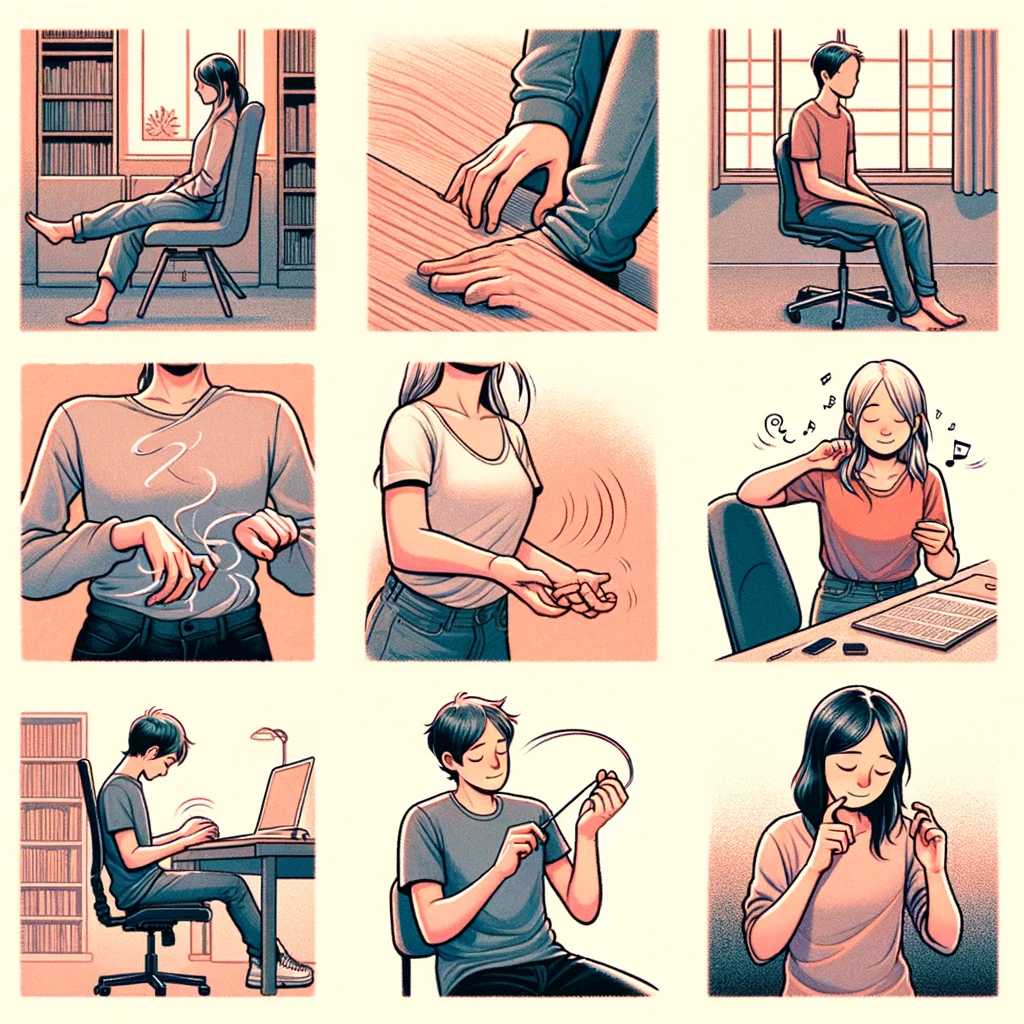
Stimming, short for self-stimulatory behavior, involves repetitive movements, sounds, or actions such as hand-flapping, rocking, or repeating words. ADHD people and other neurodivergent people use stimming to manage anxiety, regulate sensory input, and stay calm or focused.
When someone feels overwhelmed, bored, or overstimulated, stimming can help restore a sense of control. Many people stim without realizing it, such as tapping a foot, fidgeting, or moving while thinking.
How Does Stimming Relate to ADHD?
Stimming helps ADHD people self-regulate, especially during boredom, anxiety, impulsive urges, or sensory overload. Many ADHD people experience dysregulation in environments that are not designed for their brains.
Stimming offers a way to restore balance by providing the sensory input the nervous system needs. It is a natural and adaptive response for ADHD brains.
Stimming in ADHD vs. Autism
Sensory Processing and ADHD Stimming
To fully understand why people stim, it helps to know about the different senses involved:
-
Proprioceptive Sense:
- This helps you feel the position and movement of your body.
-
Vestibular Sense:
- Governs balance and spatial orientation. Activities like spinning or jumping help regulate balance and focus.
-
Interoceptive Sense:
- Involves sensing internal feelings like hunger or your heartbeat. Stimming helps balance these internal sensations.
Understanding which sense is affected can help you better recognize the purpose behind stimming.
Types of Stimming: Examples and Variations
Different types of stimming meet different sensory and regulation needs.
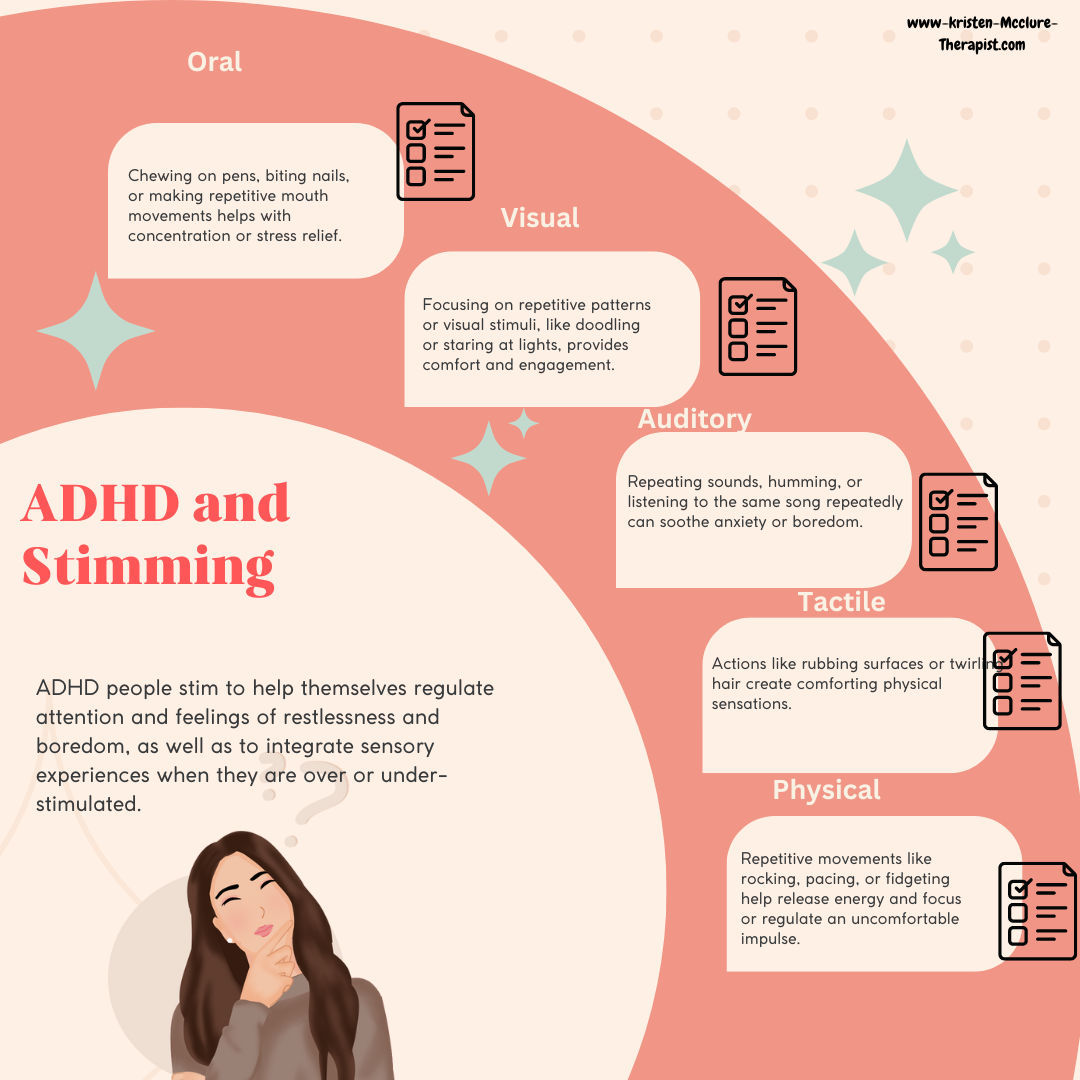
Physical Stimming
Repetitive movements such as rocking, pacing, bouncing a leg, or fidgeting.
These movements help release excess energy, support focus, or regulate uncomfortable impulses.
Visual Stimming
Focusing on repetitive visual patterns or stimuli, such as doodling, watching moving lights, or tracing shapes.
Visual stimming can provide comfort, engagement, and mental grounding.
Auditory Stimming
Repeating sounds, humming, tapping, or listening to the same song on repeat.
This type of stimming can soothe anxiety, reduce boredom, and support emotional regulation.
Tactile Stimming
Touch-based actions such as rubbing textured surfaces, squeezing objects, or twirling hair.
Tactile input creates calming physical sensations and helps regulate sensory input.
Oral Stimming
Chewing on pens or gum, biting nails, or making repetitive mouth movements.
Oral stimming often supports concentration, stress relief, and self-soothing.
Each type of stimming meets a sensory need, making it essential for emotional and sensory regulation.

The Harm of Stopping ADHD Stimming
Parents' impulse is to stop neurodivergent children from stimming. Recognizing its value can promote more self-acceptance and emotional stability in children. However, preventing stimming can harm mental health. When stimming is suppressed, anxiety, emotional dysregulation, and mental fatigue can increase. Forcing someone to stop stimming takes away their natural coping tool, making it harder for them to navigate overwhelming situations. Unless it’s causing harm, it’s crucial to let people stim freely.
Stimming Across Life Stages
Stimming can evolve as you age. As a child, stimming might be more movement-based, such as jumping or hand-flapping. These behaviors, like tapping your fingers or bouncing your leg, may become more subtle as you age. Regardless of how it looks, stimming is vital as a coping skill for managing sensory input throughout your life.
Stimming in Different Environments
As an adult, stimming behaviors may change based on where you are. At work, someone might fidget with a pen or pace to help stay focused. They may engage in more physical stimming at home, like rocking or jumping. Being aware of how you stim in different settings and allowing yourself to do so can reduce social discomfort and boost emotional well-being.
Hormonal Impacts and Stimming
For women with ADHD, hormonal changes (during menstruation, pregnancy, or menopause) can increase sensory sensitivity, which makes stimming even more important. As hormone levels fluctuate, the need for sensory regulation often grows, and stimming helps manage the discomfort that comes with these changes.
Managing Harmful Stimming
If stimming becomes harmful or disruptive, here are ways to manage it safely:
- Identify triggers: Understand what situations lead to harmful stimming.
- Substitute behaviors: Find safer alternatives that provide the same sensory input.
- Adjust your environment: Create safer spaces to reduce harm.
- Practice self-regulation techniques: Mindfulness, deep breathing, or sensory breaks can help.
- Use sensory tools: Weighted blankets, fidget toys, or noise-canceling headphones can offer comfort.
- Seek professional support: A neurodivergent-informed therapist can help develop personalized strategies.
Conclusion: Embrace Stimming
Stimming is a natural and helpful tool for people with ADHD. It supports sensory regulation, emotional well-being, and focus. Suppressing it can lead to more harm while accepting and encouraging stimming can improve emotional and mental health. Unfortunately, many adults don't understand its purpose because children have been punished for this behavior.
Supressing stimming can also be related to ADHD burnout. Learn about that here.
