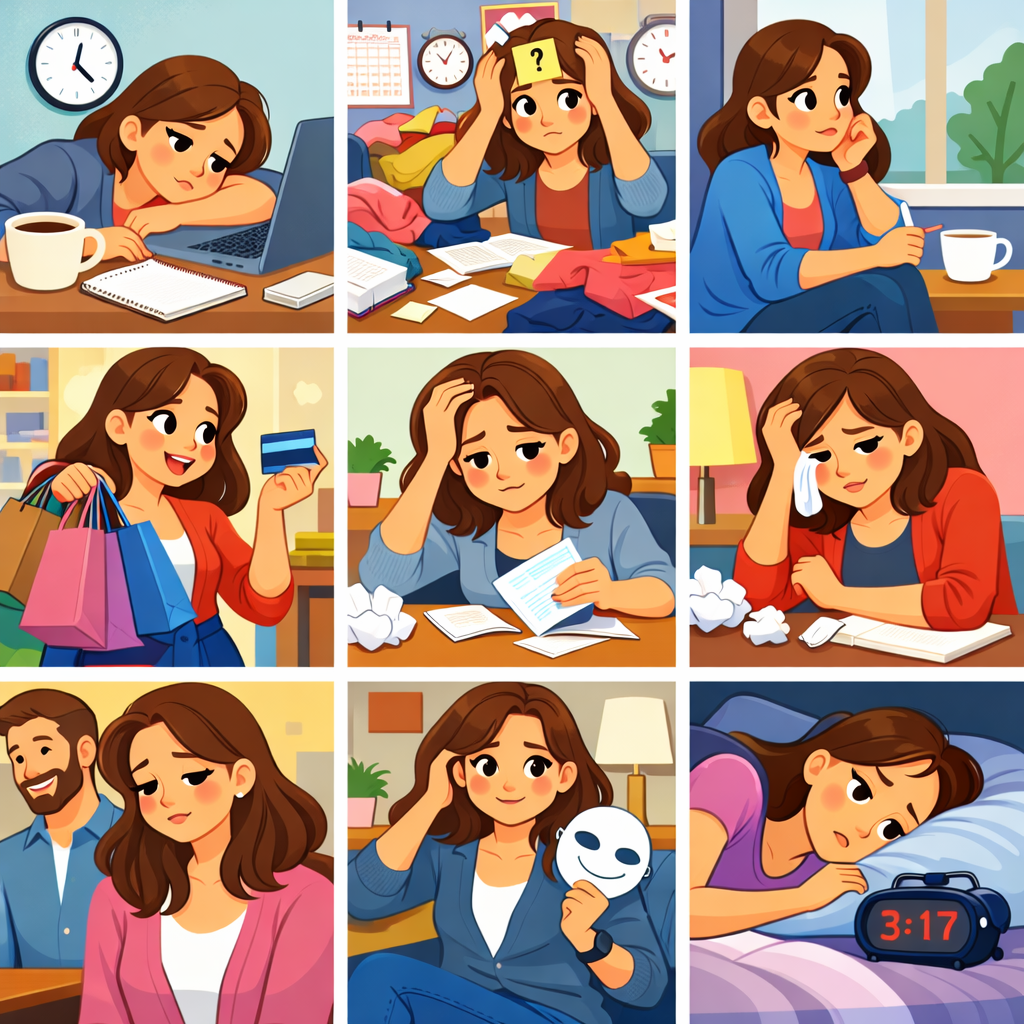
ADHD in women is often missed because it does not always look like the stereotype people expect.
Many adult women do not present with obvious outward hyperactivity. Instead, ADHD may show up as inconsistent attention, internal restlessness, forgetfulness, emotional intensity, disorganization, time blindness, and years of masking symptoms to appear capable on the outside.
This ADHD symptoms checklist for women is designed to help you recognize common patterns in how ADHD can present in adult women. It includes core symptom areas such as inattention, impulsivity, executive dysfunction, working memory problems, emotional dysregulation, and masking.
Common ADHD symptoms in adult women include:
-
difficulty sustaining attention
-
forgetfulness and working memory problems
-
disorganization and time blindness
-
internal restlessness
-
impulsivity
-
emotional dysregulation
-
rejection sensitivity
-
masking and overcompensating
-
sleep and energy dysregulation
This checklist is not a diagnostic test, but it may help you recognize patterns that are worth exploring with a qualified clinician who understands how ADHD presents in women.
A Note Before You Begin
This checklist is not a diagnostic tool. Only a qualified clinician can diagnose ADHD.
What this checklist can do is help you notice patterns in your experience and give you language to describe those patterns if you seek an evaluation. You do not need to relate to every item. ADHD is not about checking every box. It is about whether there is a persistent pattern that shows up across settings and has been affecting daily life over time.
If you have spent years wondering why things seem harder for you than they do for other people, or why you have to work so much harder to stay on top of what looks easy from the outside, this checklist may help you make sense of that experience.
Common ADHD Symptoms in Adult Women
ADHD symptoms in adult women often include a mix of inattention, executive dysfunction, internalized hyperactivity, impulsivity, emotional dysregulation, and chronic masking.
Women are also more likely to be overlooked or diagnosed later because their symptoms may look less disruptive from the outside. A girl who daydreams, forgets things, loses focus, overcompensates, or becomes intensely self-critical may not be recognized as having ADHD at all.
Below is a more detailed checklist organized by common symptom domains.
Inattention Symptoms in Women with ADHD
Women with ADHD rarely struggle to pay attention to everything. More often, attention is inconsistent — deeply available for some things, difficult to access for others.
Check the ones that apply to you:
☐ I frequently lose track of conversations, especially in groups or when there is background noise
☐ I reread the same paragraph multiple times without absorbing it
☐ I start tasks and leave them unfinished, not because I stopped caring, but because my attention moved on
☐ I can hyperfocus on something that interests me for hours, but struggle to start or sustain tasks that feel boring or obligatory
☐ I zone out mid-conversation even when I genuinely want to be present
☐ I forget what I walked into a room to do, even if it was seconds ago
☐ I make careless mistakes on things I actually know how to do
☐ I often have to ask people to repeat themselves, not because I did not hear them but because I was not fully there
☐ My attention drifts to whatever is most stimulating, not whatever is most important
☐ I have a hard time reading long documents or watching things without subtitles
Hyperactivity and Impulsivity in Women
Hyperactivity in women often does not look like running around. It may feel more like a constantly active mind, physical restlessness, impulsive speech, or a chronic sense of internal urgency.
Check the ones that apply to you:
☐ My mind is almost always running, even when I want it to stop
☐ I find it hard to relax without doing something at the same time — watching TV while scrolling, listening to a podcast while cleaning
☐ I talk fast, talk a lot, or feel a strong urge to say things before the moment passes
☐ I move through tasks, rooms, or projects quickly and impulsively, often before I have finished what I was doing
☐ I feel physically restless — tapping, fidgeting, needing to move — especially in situations that require stillness
☐ I get bored extremely quickly, even with things I chose to do
☐ I struggle to sit through meetings, movies, or events without feeling an almost physical need to leave or move
☐ I feel like there is always a low hum of urgency or restlessness underneath the surface, even on calm days
☐ I interrupt people, finish their sentences, or blurt things out because I feel like the thought will disappear if I do not say it now
☐ I make impulsive decisions, purchases, commitments, or changes that I later have to manage the consequences of
Executive Dysfunction, Disorganization, and Time Blindness
Executive functioning includes planning, prioritizing, starting, shifting, and completing tasks. These are often the areas where ADHD creates the most friction in adult life.
Check the ones that apply to you:
☐ I know exactly what I need to do and still cannot make myself start it
☐ I underestimate how long things will take, consistently
☐ I miss deadlines, appointments, or obligations because managing time is genuinely hard for me
☐ My living space, car, bag, or email inbox often reflects my internal state: chaotic, even when I have tried to organize it
☐ I rely heavily on alarms, lists, and reminders, and still miss things
☐ When I have multiple things to do, I often freeze and do none of them
☐ I put off tasks I find boring or aversive until they become urgent, then do them in a panic
☐ I lose things constantly: keys, phone, glasses, important papers
☐ Transitions are hard — switching from one task to another takes more effort than it seems like it should
☐ I have ideas, intentions, and plans that never seem to turn into action
☐ I am often late, even when I try hard not to be
☐ I have trouble estimating how much time I need to get ready, leave, or complete a task
Working Memory and Forgetfulness
ADHD affects working memory — the brain’s ability to hold and use information in the short term. This is different from forgetting things you never knew. It is forgetting things you absolutely knew, moments before.
Check the ones that apply to you:
☐ I forget things people told me recently — not distant past, but last week or yesterday
☐ I walk away from conversations and immediately lose the thread
☐ I know I was just thinking something important and it is suddenly gone
☐ I have to write everything down immediately or it disappears
☐ I forget to respond to messages even though I absolutely intended to
☐ I forget to take medication, even when I have been taking it for months
☐ My memory feels unreliable in a way that makes me doubt myself
☐ I remember random, irrelevant information vividly but forget practical things constantly
☐ I lose track of what I am saying while I am saying it
☐ I start one task, get pulled into another, and forget to return to the original one
Emotional Dysregulation and Rejection Sensitivity
Emotional symptoms are one of the most overlooked parts of ADHD in women — and often the ones that cause the most suffering. ADHD affects emotional regulation just as it affects attention. Feelings can arrive fast, feel intense, and be difficult to recover from.
Check the ones that apply to you:
☐ My emotions feel more intense than other people’s — not more dramatic, just bigger and faster
☐ Small frustrations can trigger a disproportionately strong reaction that I often regret afterward
☐ I have very low tolerance for boredom, waiting, or situations I cannot control
☐ Criticism — even mild, well-intentioned criticism — can feel devastating and stay with me far longer than it should
☐ I experience sudden mood shifts that feel confusing even to me
☐ I get overwhelmed quickly when there is too much happening at once
☐ I feel shame easily, often triggered by mistakes or falling short of what I think I should be doing
☐ I replay interactions, conversations, and mistakes repeatedly, even when I know it is not helpful
☐ When something interests me, I feel it completely. When it does not, I feel almost nothing
☐ I am highly sensitive to rejection, exclusion, or the possibility that someone is disappointed in me
If criticism sensitivity or emotional reactivity strongly resonates, you may also want to read about Rejection Sensitive Dysphoria (RSD) in women with ADHD, which is very common and often goes unrecognized.
Masking in Women with ADHD
Masking happens when a person with ADHD learns that her natural way of functioning is not acceptable and develops strategies to appear organized, attentive, calm, and capable. These strategies can hide the diagnosis for years. They do not prevent the exhaustion that comes with maintaining them.
Check the ones that apply to you:
☐ I work much harder than other people seem to in order to produce similar results
☐ I appear more organized, calm, or capable than I feel internally
☐ I have spent years developing systems and workarounds to compensate for how my brain works
☐ I keep my struggles very private — most people would be surprised to know how hard everyday life is for me
☐ I have been told I am “fine,” “too smart to have ADHD,” or “not the type,” and I have partly believed it
☐ I perform well in structured environments but fall apart the moment the structure is gone
☐ I hold everything together until I get home, then completely collapse
☐ I feel like I am playing the role of a competent version of myself, and it is exhausting
☐ I avoid situations where my struggles might become visible
☐ I have internalized words like “too sensitive,” “scattered,” “all over the place,” or “a lot” as character flaws
Masking is one reason so many women with ADHD are diagnosed late — often not until their 30s, 40s, or beyond.
Sleep, Energy, and Hormonal Factors
Sleep is not part of the formal diagnostic criteria for ADHD, but many women with ADHD struggle with sleep, energy regulation, and symptom shifts related to hormonal changes. These patterns can intensify attention problems, irritability, and overwhelm.
Check the ones that apply to you:
☐ I frequently cannot fall asleep even when I am exhausted because my mind will not stop
☐ I often get my best thinking done late at night
☐ I stay up far later than I intend to, unable to make myself transition to bed
☐ Once I am asleep, I sleep heavily and have a very hard time waking up
☐ I feel groggy and disoriented for a long time after waking
☐ No amount of sleep seems to fully fix how tired I feel
☐ I go through cycles of high energy and deep crashes
☐ My energy is unpredictable — I never quite know which version of myself I will wake up as
☐ My ADHD symptoms seem worse during PMS, postpartum, perimenopause, or other times of hormonal fluctuation
For many women, ADHD symptoms become more noticeable when life demands increase or hormones shift.
What Undiagnosed ADHD Can Feel Like Over Time
This is not a core symptom list. It is a description of what life can feel like when ADHD has gone unrecognized for years.
Read these and notice what resonates:
☐ I feel like I have to work twice as hard as everyone else just to keep up
☐ I have a constant low-level awareness that I am behind, even when I am not sure what I am behind on
☐ I have a complicated relationship with the word “lazy” — I know it is not accurate, but the shame of it lives in me
☐ I have been let down by myself so many times that I have stopped trusting my own intentions
☐ I know I am capable of more than I consistently produce, and I do not know why the gap exists
☐ I feel like something is wrong with me, even if I cannot name what it is
☐ I have spent years wondering why things that seem easy for other people are so hard for me
☐ I look functional from the outside, but everyday life feels much harder than anyone realizes
If this section lands hard, please know: the gap is not a character flaw. Sometimes it is the distance between how your brain works and what the world has expected from you without explanation or support.
What to Do If This Checklist Resonates
There is no score that confirms or rules out ADHD. What you are looking for is a pattern — a persistent, cross-context set of experiences that has been present over time and affects multiple areas of life.
If many of these items resonate, it may be worth seeking an evaluation from a clinician who understands how ADHD presents in adult women.
Before an appointment, it can help to:
-
write down specific examples of symptoms in different settings, such as work, home, school, or relationships
-
note when you first remember these struggles showing up, even if they looked different in childhood
-
bring a copy of this checklist if it helps you describe your experience
-
make a note of related concerns such as anxiety, depression, burnout, sleep problems, or hormone-related symptom changes
A thorough ADHD evaluation should take your full history into account, not just a quick checklist completed in a few minutes.
If you are in North or South Carolina, I offer specialized ADHD therapy for women grounded in nearly 30 years of clinical experience. My approach is neurodivergent-affirming, which means we start from the premise that your brain is not broken. You can learn more about working with me here or reach out directly at [insert contact email or contact page].
FAQs
What are the most common ADHD symptoms in adult women?
The most common ADHD symptoms in adult women include difficulty sustaining attention on low-interest tasks, forgetfulness, time blindness, disorganization, internal restlessness, executive dysfunction, emotional dysregulation, rejection sensitivity, and chronic exhaustion from masking. Many women with ADHD are more likely to show inattentive and internalized symptoms than the classic stereotype most people associate with ADHD.
Why is ADHD often missed in women?
ADHD is often missed in women because symptoms may present as daydreaming, disorganization, internalized restlessness, emotional sensitivity, and overcompensating rather than disruptive behavior. Many girls and women also learn to mask their symptoms, which can delay recognition and diagnosis for years.
Can I have ADHD if I was a good student?
Yes. Doing well in school does not rule out ADHD. Many women with ADHD perform well in structured, high-interest, or high-pressure environments, especially when they rely on intelligence, anxiety, perfectionism, or intense compensation to stay afloat. Problems often become more visible when life becomes more complex and self-managed.
Is it ADHD or anxiety?
Sometimes it is both. ADHD and anxiety commonly overlap, and untreated ADHD can create chronic stress, overwhelm, sleep problems, racing thoughts, and self-doubt that look a lot like anxiety. Many women are first diagnosed with anxiety, while the ADHD underneath it goes unrecognized.
Is it too late to get an ADHD diagnosis as an adult?
It is never too late. Many women are diagnosed in their 30s, 40s, 50s, and beyond. A later diagnosis can be life-changing because it helps replace self-blame with understanding and opens the door to treatment, support, and strategies that actually fit how your brain works.
What should I do if this ADHD checklist sounds like me?
If many of these symptoms feel familiar, consider seeking an evaluation from a licensed clinician who understands ADHD in adult women. A checklist can be a helpful starting point, but diagnosis should come from a qualified professional who looks at the full picture.
Check out the main page on ADHD in WOmen
The checklist
Related Reading
-
ADHD Masking in Women
-
Inattentive ADHD in Women
-
ADHD and Anxiety in Women
-
Rejection Sensitive Dysphoria in Women with ADHD
-
Executive Dysfunction in ADHD
-
Late ADHD Diagnosis in Women
-
ADHD and Perimenopause
-
ADHD Burnout in Women
Medical information on this website is not intended as a substitute for professional care. If you suspect you may have ADHD, please consult a qualified healthcare provider for a thorough evaluation.
