Table of Contents
Toggle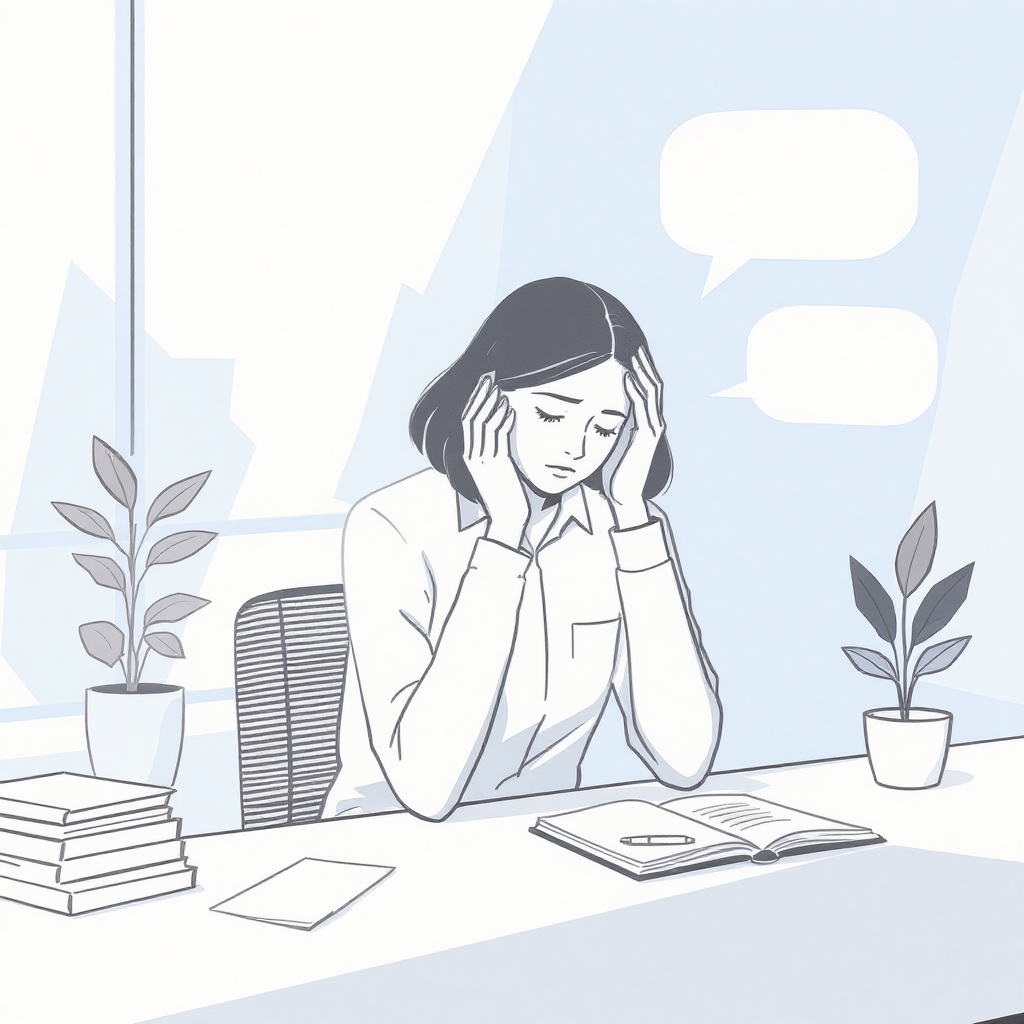
Rejection Sensitive Dysphoria (RSD) at work can make feedback, performance reviews, and even small comments feel overwhelming. For ADHD women workplace evaluation often triggers rapid shame, rumination, and difficulty calming down afterward.
Workplaces are built around evaluation.
Performance reviews, deadlines, metrics, and informal feedback are constant. For women with ADHD who experience RSD, working in this kind of environment can feel destabilizing.
In this context, feedback is not neutral. It carries social and professional weight.
Because of that, feedback may register as threat before it registers as information.
As a result, your reaction can be fast and happen without your chocie, and it can take you a while to recover.
Importantly, it reflects heightened emotional activation layered onto years of misunderstanding, correction, and performance pressure.
Over time, repeated exposure to evaluation without adequate support can increase sensitivity. This makes perfect sense.
Understanding what is happening during feedback moments becomes essential and can help.
This page explains:
• Why workplace feedback activates RSD in ADHD women
• What is happening during an episode
• How to regulate in the moment
• How to discern useful feedback from systemic mismatch
• How to reduce volatility over time
For a full explanation of RSD, see the main RSD hub.
What Is Rejection Sensitive Dysphoria at Work?
Rejection Sensitive Dysphoria (RSD) at work is an intense emotional reaction to perceived criticism, disapproval, or negative evaluation in a professional setting. It often includes rapid shame, catastrophic thinking, and prolonged rumination after feedback.
Why Workplace Feedback Hits Harder for ADHD Women
Work environments amplify three known vulnerabilities in ADHD women:
1. Performance-Based Belonging
Belonging at work is often conditional. Competence determines security.
When feedback is delivered, it may unconsciously signal:
“If I am not performing well, I may not belong here.”
For ADHD women who were frequently corrected in school or at home, this can activate old threat pathways quickly.
2. Executive Functioning Exposure
Many feedback conversations center on:
• Organization
• Time management
• Follow-through
• Attention to detail
These are executive functioning domains. When feedback targets brain-based differences, it can feel global rather than specific.
Instead of “This report needs revision,” the brain may translate it to “I am inadequate.”
3. Gendered Expectations
ADHD women are often expected to:
• Be organized
• Be emotionally regulated
• Communicate smoothly
• Anticipate needs
When feedback intersects with these expectations, it can carry additional social weight.
As a result, the reaction is not only about the task. It is about identity, belonging, and credibility.
Why Does Feedback Feel So Devastating with ADHD?
For many ADHD women, feedback feels larger than the situation itself. Even neutral comments can activate fears of failure, incompetence, or being fired.
Workplace feedback often targets executive functioning skills such as organization, time management, and follow-through. When those areas are neurologically vulnerable, criticism can feel global rather than specific.
Instead of hearing:
“This report needs revision,”
the brain may translate it as:
“I am failing at my job.”
The truth is you have likely experienced discrimination in many places because of your brain based differences. This is also a part of what you are responding to.
What Happens During an RSD Episode at Work
Understanding the sequence reduces confusion.
RSD at work often follows this pattern:
-
A cue (criticism, tone shift, evaluation language)
-
Immediate threat interpretation
-
Rapid emotional activation
-
Cognitive distortion (catastrophizing, mind-reading, overgeneralizing)
-
Rumination
The body activates first. Interpretation accelerates second.
During activation, the brain prioritizes social threat detection over nuance. Therefore, neutral or constructive feedback may feel catastrophic.
Recovery depends less on eliminating emotion and more on shortening activation time.
The Fear of Being Fired
Many women with ADHD describe an immediate fear that a mistake or piece of feedback means they are about to lose their job.
Even when there is no evidence of termination, the nervous system reacts as if job security is threatened. This fear intensifies rumination and slows recovery.
The reaction is often about belonging and safety, not actual performance risk.
A Regulation Protocol for Workplace Feedback
This is not about suppressing emotion. It is about responding deliberately.
Step 1: Stabilize Before Interpreting
When feedback is delivered:
• Slow your breathing
• Reduce physical tension
• Delay immediate verbal reaction
Even a 10–20 second pause reduces escalation.
If needed, say:
“Thank you. I want to think about that for a moment.”
This protects you from reacting from activation.
Step 2: Separate Task From Identity
Consciously identify what the feedback is about.
Ask:
• Is this about a specific task?
• Is this about a skill?
• Is this about a pattern?
Name it narrowly.
Instead of “I am bad at my job,” clarify:
“This feedback is about the timeline on this project.”
Specificity reduces identity collapse.
Step 3: Ask for Concrete Examples
RSD worsens when feedback is vague.
Clarify:
• “Can you give me an example?”
• “What would success look like here?”
• “Is this about consistency or this instance?”
Concrete expectations reduce ambiguity, which reduces threat.
Step 4: Delay Global Conclusions
Do not assess your career during activation.
Instead, wait until:
• Your heart rate settles
• Rumination decreases
• Emotional intensity drops
After this, try and review feedback again.
Many ADHD women report that feedback feels catastrophic in the moment but manageable 24 hours later.
Time improves accuracy.
Step 5: Shorten Recovery, Not Emotion
The goal is not to eliminate sensitivity.
The goal is to:
• Reduce rumination length trhough support for yourself
• Avoid defensive escalation
• Return to baseline more quickly
Shorter recovery improves professional stability.
Discernment: Is This Growth Feedback or Environment Mismatch?
Not all feedback should be internalized.
For that reason, discernment matters.
Before absorbing criticism, pause and evaluate the structure around it.
Ask:
• Is this feedback specific and actionable?
• Is it consistent with my role expectations?
• Is it balanced with acknowledgment of strengths?
• Is it delivered respectfully?
If the answer is yes to most of these, the feedback may be growth-oriented.
However, if feedback is:
• Chronically vague
• Primarily negative
• Focused on traits rather than tasks
• Inconsistent across supervisors
then the issue may be environmental rather than personal.
This distinction is critical.
ADHD women often overcorrect in environments that are structurally misaligned with their strengths. Over time, that overcorrection erodes confidence rather than improving performance.
Therefore, it is important to distinguish between:
Skill refinement
and
Systemic incompatibility.
Making that distinction protects self-trust and prevents unnecessary self-blame.
Longer-Term Stability Strategies
Workplace RSD improves when predictability increases.
Consider:
• Requesting written expectations
• Clarifying performance metrics in advance
• Scheduling regular check-ins rather than surprise evaluations
• Documenting strengths alongside growth areas
• Exploring reasonable accommodations when executive functioning is central to feedback
In addition, mapping your strengths matters.
If your role consistently penalizes your core neurological patterns, long-term volatility will remain high.
Regulation strategies help.
However, environment fit also matters.
When Additional Support Is Helpful
In over 30 years of clinical work with women with ADHD, workplace evaluation is one of the most common RSD triggers described.
Sometimes self-regulation strategies are not enough.
If workplace feedback consistently leads to:
• Persistent dread
• Sleep disruption
• Emotional crashes
• Avoidance of advancement
• Repeated conflict with supervisors
then additional support may be appropriate.
When activation becomes chronic rather than situational, it is a sign that the environment and your nervous system are in sustained tension.
In that case, working with an ADHD-informed therapist can help you develop more targeted tools, including:
• Activation mapping
• Cognitive reframing
• Boundary setting
• Accommodation planning
These supports are not about reducing ambition. They are about increasing stability.
RSD does not mean you cannot succeed professionally.
However, it does mean evaluation-heavy environments require more deliberate regulation and clearer structure than most workplaces naturally provide.
Closing Perspective
The goal is to respond with discernment rather than threat reflex.
When activation decreases and clarity increases, feedback becomes helpful information instead of indictment.
Finally, that shift will also help build professional stability without requiring you to suppress your sensitivity.
Other pages on Rejections Sensititivity
References
No. Workplace anxiety is broader. RSD refers specifically to intense emotional reactions to perceived rejection or criticism.
RSD often includes prolonged rumination. The nervous system remains activated even after the event ends.
For some individuals, medication improves emotional regulation capacity, which may shorten recovery time.
Disclosure is a personal decision and depends on workplace culture and need for accommodations.
