ADHD and Emotional Dysregulation in Women: Signs, Causes & What Helps
By Kristen McClure, MSW, LCSW | Neurodivergent-affirming therapy for women
You may know the pattern.
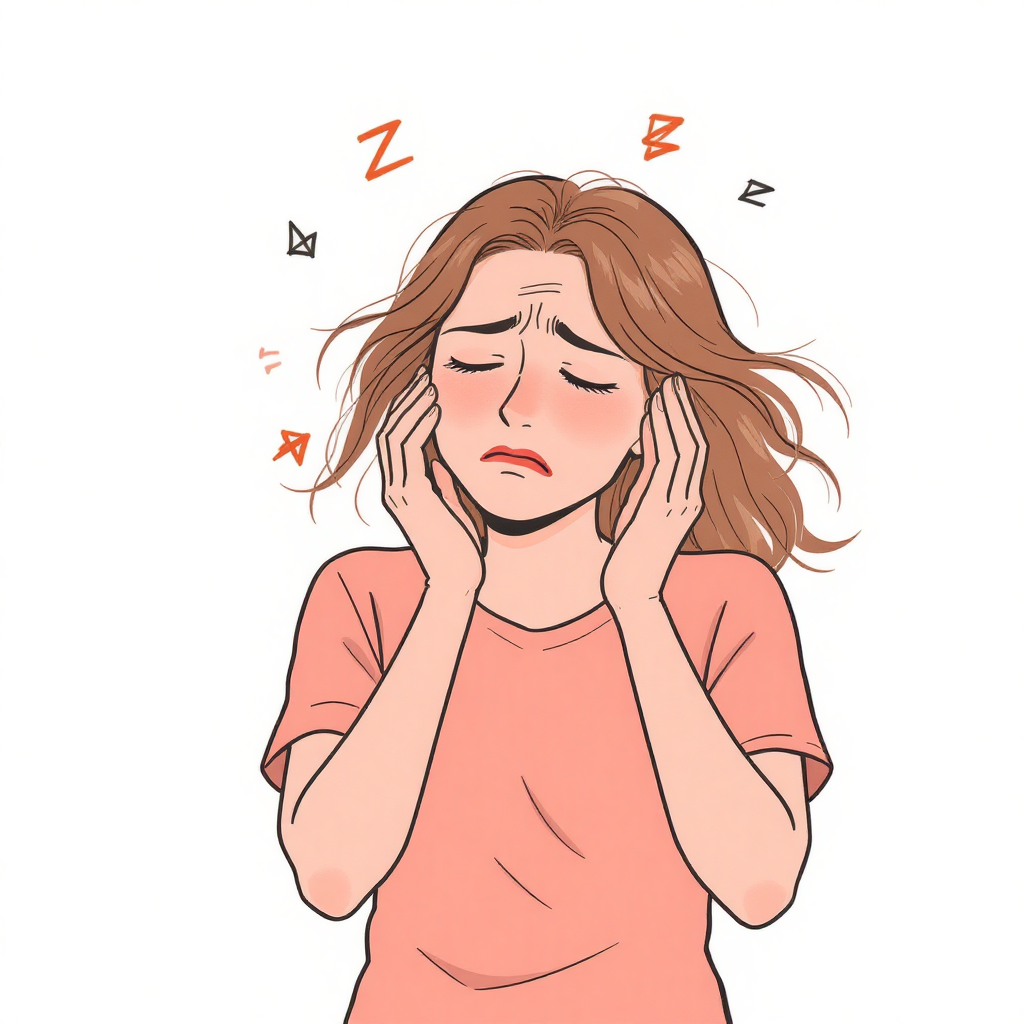
An emotion rises quickly. Your body reacts before you can sort through what is happening. Other people may only see the reaction. They may not see the speed of the emotion, the intensity in your body, or the effort it takes to regain control.
Then the embarrassment comes. The replaying. The apology that does not fully explain it. The question: Why did I react like that?
For ADHD women, intense emotions are not a character problem. ADHD can affect how quickly emotions rise, how strongly they register in the nervous system, and how long they take to settle.
Understanding this does not make the feeling disappear. It can reduce the shame that often comes after it.
What Emotional Dysregulation Actually Is in ADHD
Emotional dysregulation describes difficulty modulating the intensity, duration, or expression of emotions. It is common in adults with ADHD and can be clinically significant, but it is not part of the current DSM diagnostic criteria and it does not look the same in everyone.
Research points to several possible contributors, including differences in executive control, attention shifting, inhibition, emotional processing, stress, sleep, and co-occurring conditions. Brain-imaging studies also suggest differences in emotion-regulation networks, but there is not one settled brain mechanism that explains emotional dysregulation in ADHD.
For some adults with ADHD, emotions can rise quickly, feel intense, and take longer to settle.
Research supports the broader pattern. A meta-analysis of 13 studies involving 2,535 adults found greater emotion-regulation difficulties in adults with ADHD than in comparison groups. A later systematic review reached a similar overall conclusion while emphasizing that studies use different measures and that more research is needed on sex differences, co-occurring conditions, and treatment.
Faster Emotional Onset
Emotions in ADHD can rise quickly. The gap between a trigger and a full emotional response may be very short. By the time the brain’s regulation system starts to engage, the emotion may already feel intense.
Greater Emotional Intensity
Emotions in ADHD can feel stronger because the nervous system may apply less automatic filtering. Frustration may feel more frustrating. Disappointment may feel harder to tolerate. This is not exaggeration. It is intensity in the nervous system.
Slower Return to Baseline
After an emotional event, the ADHD nervous system may take longer to return to calm. The emotion may stay active in thoughts, body sensations, and working memory, even when you want to move on.
Difficulty Switching Emotional States
Once an emotion is activated, shifting attention to something else can be difficult. That shift requires executive function, which ADHD affects. Getting stuck in an emotional state is not a choice. It can happen when the brain’s switching system does not engage quickly.
Why Emotional Dysregulation in ADHD Is Often Missed in Women
Emotional dysregulation is common in ADHD and can be one of the most impairing parts of the condition. Yet it is often missed, especially in women.
One reason is that ADHD has historically been recognized through more visible symptoms, such as hyperactivity, impulsivity, and school disruption. Emotional dysregulation was not included in the DSM diagnostic criteria for ADHD, even though many ADHD people experience it as central to daily life.
For ADHD women, several patterns make it easier to miss.
It Gets Called Something Else
Intense emotional responses in women are often attributed to anxiety, depression, borderline personality disorder, premenstrual dysphoric disorder, or being “too emotional.”
The ADHD-related pattern can go unrecognized for years, especially when the emotional intensity is treated as the whole problem instead of a clue to the underlying nervous system difference.
Women Often Internalize It
ADHD emotional dysregulation does not always look like an outburst. For many women, it turns inward.
It may show up as rumination, self-criticism, anxiety, shame, withdrawal, or depression. This can make the struggle less visible to others, while still feeling intense inside.
The Masking Can Be Extensive
Many ADHD women learn early that their emotional responses are “too much.” They may become skilled at appearing calm while feeling overwhelmed internally.
That masking can work on the outside for years. Inside, it often creates exhaustion, disconnection, and a growing sense of shame.
Hormonal Changes Can Intensify It
Hormonal changes may influence attention, mood, sleep, and emotional regulation in some ADHD women. Estrogen interacts with neurotransmitter systems involved in ADHD, but the exact mechanisms are still being studied and are more complex than a simple estrogen-to-dopamine explanation.
Anecdotally, many ADHD women describe changes in emotional regulation across the menstrual cycle, postpartum, and during perimenopause or menopause. Newer research is beginning to document these patterns, but the size and cause of the changes vary. Severe cyclical symptoms also deserve assessment for conditions such as PMDD rather than being assumed to be ADHD alone.
Emotional Dysregulation Patterns That Show Up Most
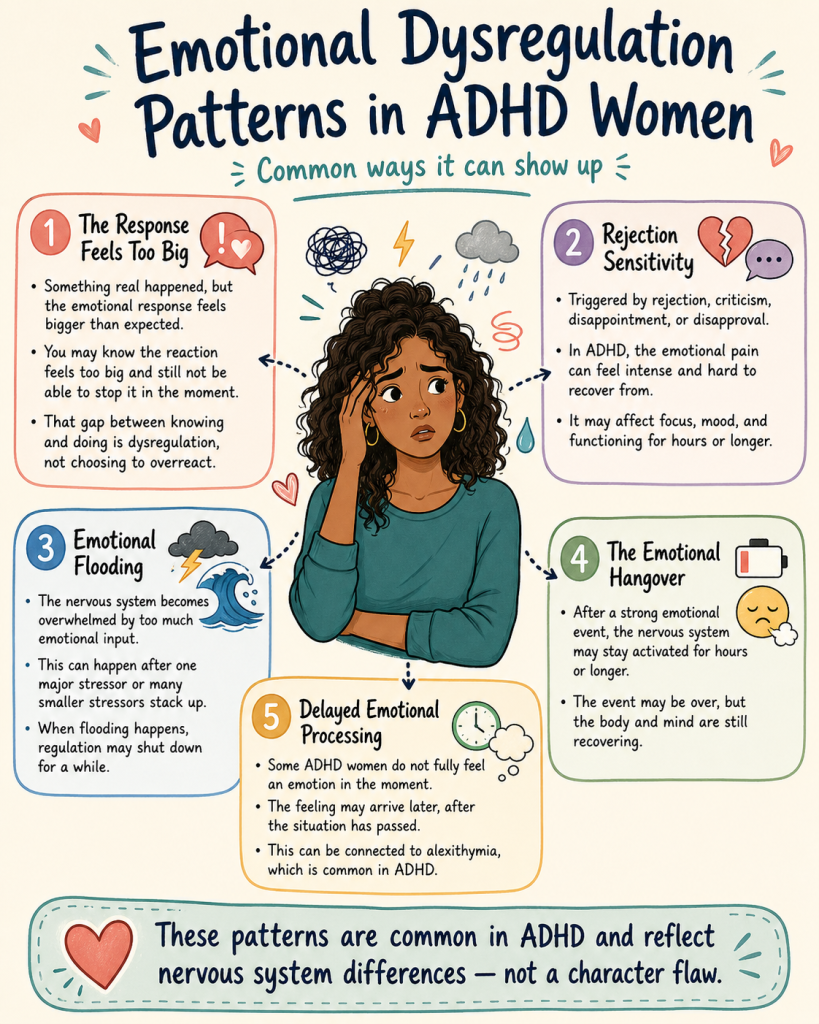
The Response Feels Too Big
Something real happened, but the emotional response may feel larger than the situation seems to call for. That gap can be painful because you may know the reaction feels too big and still not be able to stop it in the moment.
That gap between knowing and doing is part of dysregulation. It is not the same as choosing to overreact.
Rejection Sensitivity
Many ADHD people describe intense emotional reactions to criticism, rejection, disappointment, or disapproval. The term rejection sensitivity is often used for this experience, although it is not a formal ADHD diagnosis and the research is still developing.
In ADHD, this can feel intense and difficult to recover from. The emotional pain may derail focus, mood, and functioning for hours or longer.
Emotional Flooding
Emotional flooding happens when the nervous system becomes overwhelmed by too much emotional input at once. This can happen after one major stressor or after many smaller stressors stack up.
When flooding happens, regulation may become temporarily unavailable. Functioning may shut down because the nervous system has exceeded its processing capacity.
The Emotional Hangover
After a strong emotional event, the ADHD nervous system may stay activated for hours or longer. This can happen after conflict, criticism, disappointment, overstimulation, or even something positive.
The event may be over, but the nervous system is still recovering.
Delayed Emotional Processing
Some ADHD women do not fully feel an emotion in the moment. The emotion may arrive later, after the situation has passed.
This can be connected to alexithymia, which is difficulty identifying or describing emotions and is common in ADHD.
The Dysregulation-Shame Cycle
The hardest part of ADHD emotional dysregulation is often not only the emotional event. It is the shame that comes after.
An emotion rises quickly. It may come out more strongly than you wanted. Afterward, shame shows up: shame about the intensity, the reaction, the words, the tone, or what you fear it says about you.
That shame can activate the threat response. When the nervous system feels threatened, the prefrontal cortex has a harder time helping with regulation, judgment, and impulse control.
This means shame does not prevent future dysregulation. It can make regulation harder.
Criticizing yourself into better behavior may feel natural after an emotional reaction, but it often keeps the cycle going.
What Actually Helps
Accurate Understanding
Emotional dysregulation in ADHD is not chosen. It is connected to how the ADHD nervous system processes and regulates emotion.
Understanding this does not remove the feeling. It can reduce the shame that makes the feeling harder to recover from.
Medication
ADHD medication can improve emotional dysregulation for some adults, although the evidence is smaller and less consistent than the evidence for core ADHD symptoms. Medication effects vary, and emotional symptoms may also need their own psychological, relational, or environmental supports.
Some women notice that medication helps emotional steadiness as much as, or more than, focus.
Recognizing Early Signals
The nervous system often gives signals before emotional flooding. These may include body tension, faster thoughts, irritability, difficulty processing, or a rising sense of urgency.
Learning to notice these early signals can make it easier to pause, reduce input, or use support before the emotion takes over.
HALT: Hunger, Anger, Loneliness, Tiredness
ADHD emotional dysregulation can worsen when basic needs are unmet.
Hunger, anger, loneliness, and tiredness can all reduce regulation capacity. Attending to these needs is not self-indulgence. It is nervous system maintenance.
Environment Design
Reducing emotional stressors across the day can lower the risk of dysregulation.
This may mean fewer back-to-back demands, more recovery time, clearer communication, sensory supports, or less exposure to situations that repeatedly overwhelm your system.
Repair Over Perfect Prevention
You will not prevent every emotional reaction. The more useful skill is repair.
Repair means returning to the relationship, naming what happened, taking responsibility where needed, and making a plan for next time. Repair reduces shame and protects connection.
ADHD Emotional Regulation Support
With emotional regulation, we look at your patterns and capacity, reduce shame, make practical accommodations, identify what helps, and build enough recovery into daily life that regulation is not expected to happen under impossible conditions.
Frequently Asked Questions
Emotional dysregulation is common and clinically important in adult ADHD, but it is not part of the current DSM diagnostic criteria and researchers still debate whether it should be considered a core feature. Studies consistently find more emotion-regulation difficulty in adults with ADHD than in comparison groups, but the pattern and severity vary from person to person.
No. ADHD and borderline personality disorder can both involve emotional reactivity, and they can also co-occur. They cannot be reliably distinguished from emotional intensity alone. A careful assessment looks at the full pattern over time, including ADHD symptoms and developmental history as well as identity, relationships, impulsivity, self-harm, trauma, mood symptoms, and other possible explanations.
Some ADHD women report more emotional difficulty in the premenstrual phase, and newer research is beginning to document greater premenstrual symptom burden in ADHD samples. Hormones may interact with attention, mood, sleep, and neurotransmitter systems, but the mechanism is not fully established. Severe cyclical mood symptoms can also reflect PMDD or premenstrual worsening of another condition and deserve separate assessment.
ADHD medication may improve emotional regulation for some adults, but the evidence is more limited and variable than it is for core ADHD symptoms. Stimulants and atomoxetine have shown improvements in emotional dysregulation in some studies. Medication decisions should be individualized with a prescriber, and emotional regulation may still need psychological, relational, or environmental support.
The most effective approach is not trying to prevent every dysregulation event — which sets an impossible standard — but developing a consistent repair practice. Returning to the conversation when regulated, naming what happened without self-flagellation, and making it right changes the relational consequence of dysregulation over time. Simultaneously, learning your early warning signals and building in accommodation (time to regulate before responding, written communication during conflict) reduces the frequency and severity of events
Continue Exploring
- ADHD in Women — the complete picture
- Rejection Sensitive Dysphoria
- ADHD Anger in Women
- ADHD and Shame
- ADHD Fight-or-Flight Response
- How Hormones Affect Emotional Regulation
- ADHD Burnout in Women
If you are a woman with ADHD whose emotional responses have been called too much, too intense, or too sensitive — by others or by yourself — neurodivergent-affirming therapy can help you understand what's actually happening and build support that works with your nervous system. I offer telehealth therapy in North Carolina and South Carolina. Reach out at kristenlynnmcclure@gmail.com or find me on Psychology Today.
Ready to Work Together?
If what you've read here feels familiar, I'd love to hear from you. I work with women with ADHD across North Carolina and South Carolina via secure telehealth — from wherever you are in either state.
